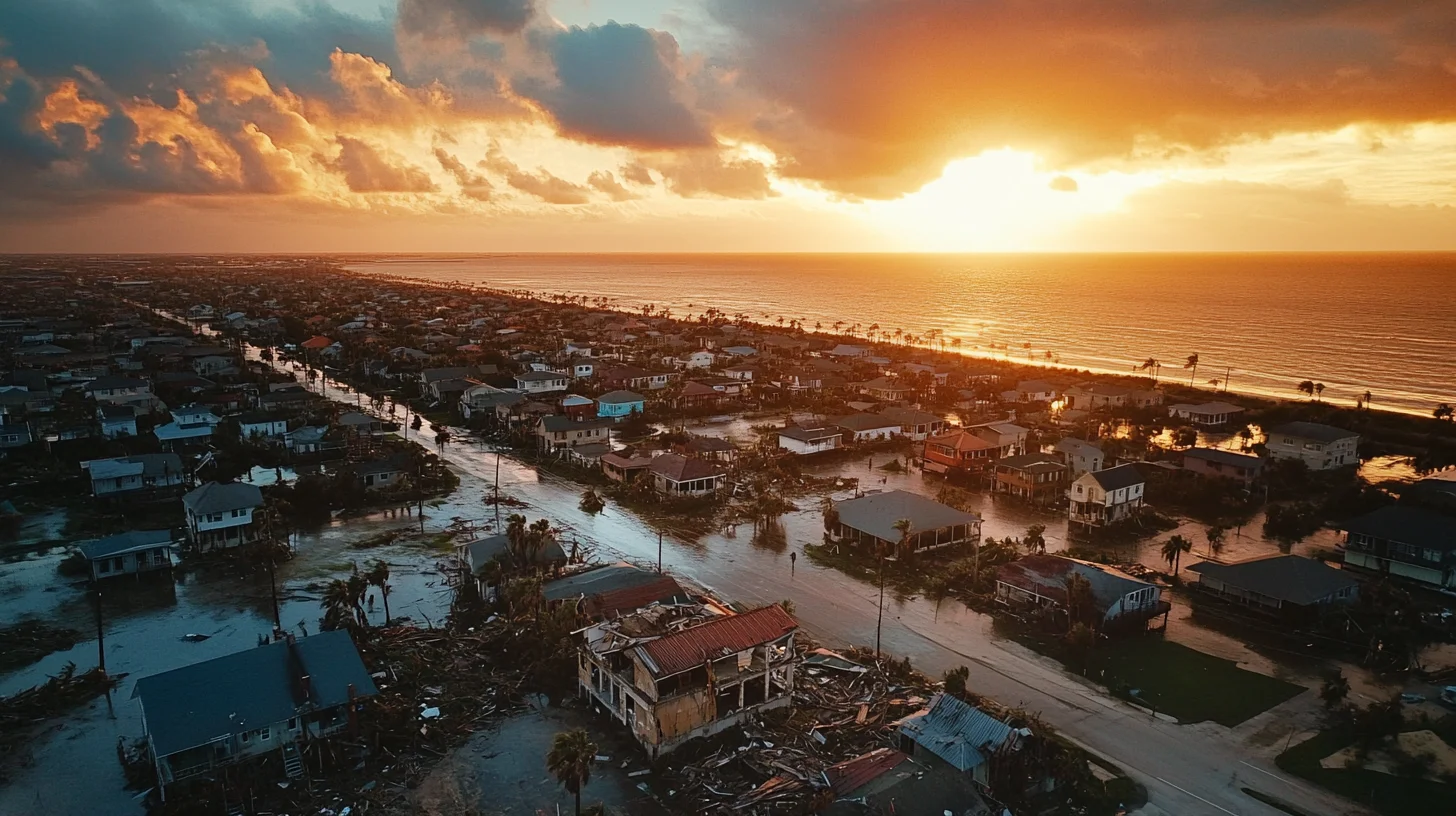
Buncombe County — Asheville and the western North Carolina mountains — was devastated by Hurricane Helene in 2024, proving that even the mountains are not safe from hurricanes.
Storm damage on Buncombe County roofs
Buncombe County roofs face real storm exposure — and the most expensive damage is often invisible from the ground.
Hurricane Helene (2024) brought historic, catastrophic flooding and landslides to Buncombe County and the Asheville area, destroying roads, downing tens of thousands of trees onto homes, and damaging or destroying countless roofs — one of the worst natural disasters in North Carolina history. Recovery is ongoing, and demand for licensed roofers across the region remains intense.
🌀 Buncombe County storm history
Helene (2024) was a historic catastrophe — extreme rainfall, landslides, and falling-tree roof damage across the Asheville area.
📋 Buncombe County building & wind code
North Carolina enforces the State Building Code (the NC Residential Code), with high-wind design and wind-borne-debris requirements along the coast — design wind speeds reach 150 mph at the Outer Banks. Every reroof must be permitted by the local building authority; for work valued at $40,000 or more, the department will require proof of a licensed general contractor before issuing the permit. Building to current wind standards holds up far better in the next storm.
Storm-ready roof types in Buncombe County
The right roof here balances wind rating, impact resistance, and long-term durability.
Architectural shingle
Most common. Class 4 impact-rated shingles resist wind and hail and may earn an insurance credit.
Metal roofing
Excellent wind resistance and longevity — a strong fit for hurricane- and storm-prone North Carolina.
Tile & specialty
Durable but heavier; needs a structural review and proper wind detailing after any impact.
2026 roof repair & replacement ranges
Ranges reflect 2026 quotes from licensed contractors serving Buncombe County.
| Roof work | Typical range | Best for |
|---|---|---|
| Minor storm repair | $400 – $1,500 | A few damaged shingles, small leaks |
| Section / slope replacement | $1,800 – $6,500 | Localized wind or hail damage, one slope |
| Full roof replacement | $8,500 – $28,000+ | Widespread damage, aging roof, full tear-off |
Confirm the quote includes a permit pulled with the local building authority — and for work of $40,000 or more, North Carolina requires a licensed general contractor before a permit will be issued.
Your roofing product or service here. Reach homeowners actively comparing storm-damage roofing options across 13 coastal states. High-intent audience, zero waste.
Storm roof claims in Buncombe County
In North Carolina, the most important claim question is often which policy applies — wind or flood.
Wind and wind-driven-rain roof damage is covered by your homeowner policy; coastal homeowners often carry separate wind/hail coverage through the North Carolina Insurance Underwriting Association (the "Beach Plan"), with a percentage-based named-storm deductible. Document storm damage thoroughly with dated photos, file promptly, and get a licensed contractor's written report — and make sure your repair is permitted.
💧 Wind vs. flood — know the difference
North Carolina's worst storms — Floyd, Matthew, Florence, and Helene — did most of their damage through flooding, which a standard homeowner or wind policy does not cover; rising-water flood damage needs separate flood insurance (NFIP). Wind and wind-driven-rain roof damage is covered. After a storm, document both, and have a licensed roofer separate the wind damage from flood damage in writing — it matters for your claim.
Work the numbers before the adjuster does. The coinsurance calculator and the hurricane deductible calculator between them explain most of the gap homeowners find between what a roof costs and what a policy pays.
What to do once it's safe
Stay safe & tarp if needed
Don't climb a damaged roof. Cover active leaks from inside and call a pro for emergency tarping. Step-by-step tarp guide →
Document everything with dates
Dated photos of all visible damage — roof, ceilings, walls, attic. Separate wind damage from any flooding.
Hire a licensed roofer to inspect
A licensed local Buncombe County contractor finds hidden damage and writes the report your claim needs.
File within your window
Submit promptly with the inspection report, and confirm the repair will be permitted.
How to verify a roofer in Buncombe County
North Carolina has no dedicated roofing license, and the Licensing Board actively prosecutes the out-of-state "storm chasers" who descend after every hurricane.
For work valued at $40,000 or more, state law requires a licensed General Contractor — with the appropriate building, residential, or roofing-specialty classification — from the NC Licensing Board for General Contractors; performing larger work without a license is the unlicensed practice of general contracting. Verify any contractor at the NCLBGC before signing, confirm liability and workers' compensation insurance, get the scope and price in writing, and make sure a local permit is pulled.
Verify the NCLBGC license
NC requires a licensed GC for work of $40,000+ — check the NC Licensing Board for General Contractors.
Confirm insurance
Ask for liability and workers' comp certificates — out-of-state crews often lack them.
Use a local roofer
Local pros stay accountable long after the storm-chasers leave.
Find your Buncombe County city
Choose your city for a local, no-cost storm-damage roof inspection and a roofer near you.
How to hire a licensed Buncombe County roofer
StormRoofQuotes is an independent, ad-supported information resource. We don't arrange inspections or refer you to any contractor — the guides below explain how to document damage and hire a licensed local roofer yourself.
StormRoofQuotes is an independent, ad-supported information resource. We publish storm-recovery guides and clearly-labeled roofing advertisements. We do not arrange inspections, take commissions, or refer you to any contractor.
How this site works →