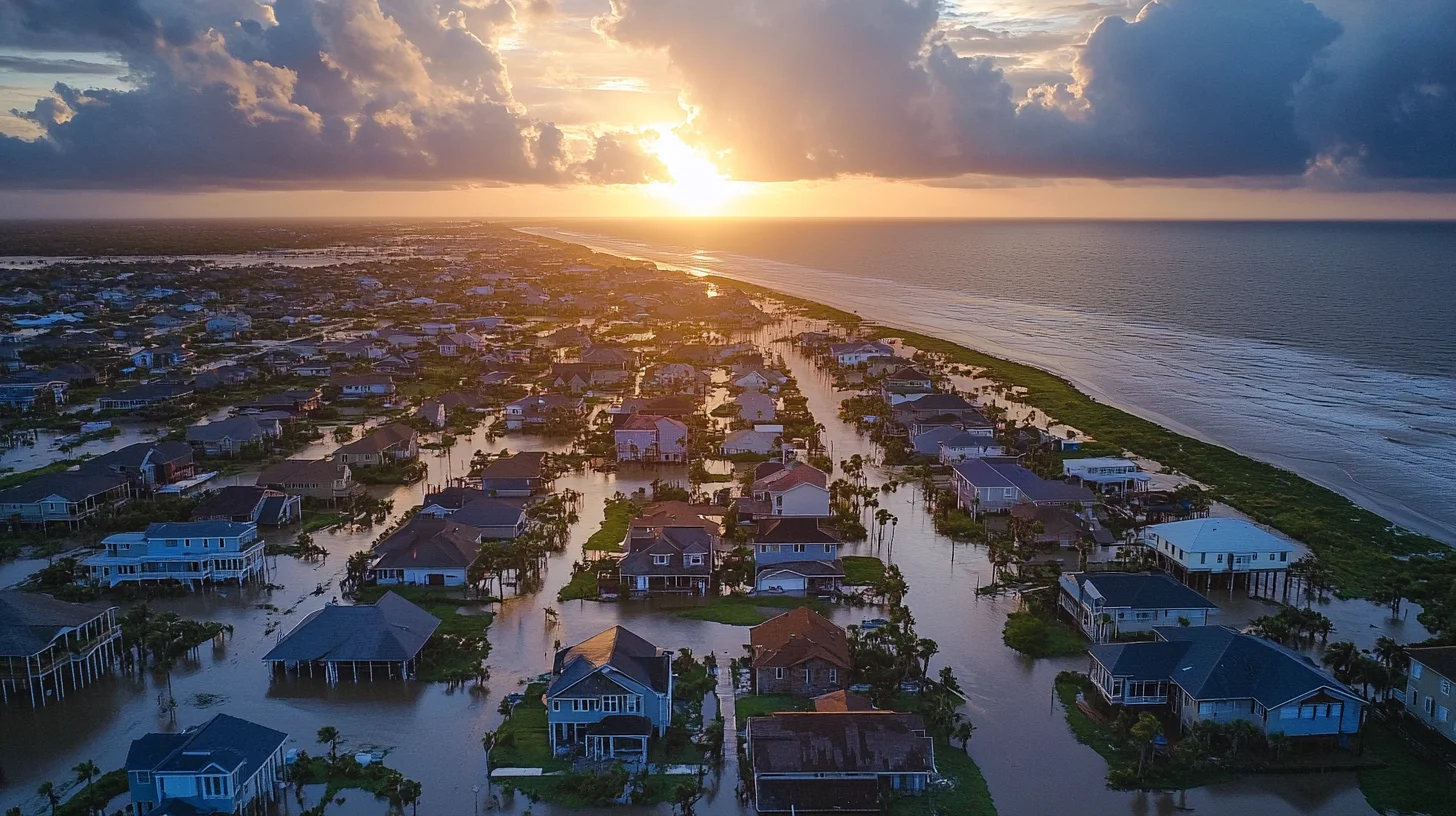
Texas is the only state that operates its own coastal windstorm insurer — the Texas Windstorm Insurance Association (TWIA). Coastal counties in the first tier require WPI-8 certificates for all roofing work to maintain TWIA eligibility. Without a current WPI-8, your next hurricane claim can be denied outright.
Storm damage on Texas roofs
Texas roofs take damage from two directions: Gulf Coast hurricanes from the south and the most active hail corridor in North America from the north.
Hurricane-force winds peel back shingle tabs, lift ridge caps, and separate flashing at every penetration. Storm surge in low-lying coastal areas saturates roof decking from below. The combination of wind uplift and moisture intrusion creates damage that doesn't surface as a ceiling stain for weeks — long after the obvious debris is cleared.
Texas hail — particularly in the Dallas–Houston–San Antonio corridor — accounts for more total insurance losses than any other state. Golf-ball-sized hail bruises the shingle mat beneath the granule surface, compromising the waterproofing layer without leaving obvious exterior marks a homeowner can spot from the ground.
🌀 Recent Texas storm benchmarks
Harvey (2017) caused $125 billion in losses — the costliest storm in U.S. history at the time. Ike (2008) leveled Galveston. The 2021 winter storm Uri caused catastrophic roof failures from ice damming and structural collapse across the state.
Coastal roof types & how they hold up in Texas
The right roof for a Texas coastal home balances wind rating, cost, and local climate exposure.
Architectural shingle
Dominant statewide. Class 4 impact-rated shingles are strongly recommended and often required for insurance eligibility in hail-prone areas.
Metal roofing
Standing seam handles both hail and hurricane wind better than any other material. Premium upfront cost; lowest long-term claim rate on the Gulf Coast.
Tile roofing
Popular in South Texas markets. Heavier installation requires structural verification; individual tiles can crack under hail impact.
📋 Texas building code & TWIA overview
Texas follows the 2021 IRC statewide with local amendments. Coastal counties require WPI-8 certificates for all roofing work to maintain TWIA windstorm coverage eligibility. Verify your county's TWIA tier before hiring any contractor.
2026 roof repair & replacement ranges
Ranges reflect 2026 quotes from licensed Texas roofers. Gulf Coast counties and TWIA-tier properties often run higher due to windstorm certification requirements.
| Roof work | Typical range | Best for |
|---|---|---|
| Minor storm repair | $400 – $1,600 | Missing shingles, hail damage, flashing |
| Section / slope replacement | $1,500 – $6,500 | Localized wind or hail damage, one slope |
| Full roof replacement | $9,000 – $30,000+ | Harvey-level events, full structural damage |
TWIA-eligible repairs require licensed contractors and WPI-8 certificates. Skipping certification to save money can void your windstorm coverage.
Your roofing product or service here. Reach homeowners actively comparing storm-damage roofing options across 13 coastal states. High-intent audience, zero waste.
Storm roof claims in Texas
Texas has a 2-year statute of limitations on storm claims — but early filing with solid documentation always produces better outcomes.
Texas law gives insurers 15 business days to acknowledge a claim and 15 days to accept or reject after receiving documentation. The 2021 Texas Insurance Code reform tightened assignment-of-benefits rules — understand your policy before signing any AOB or direction-to-pay with a contractor. TWIA claims have separate deadlines and documentation requirements.
💰 Hail & wind discounts in Texas
Class 4 impact-resistant shingles qualify for premium discounts from most Texas insurers — discounts of 15–30% are common. A documented upgrade to Class 4 materials often pays for itself within 3–5 years through premium savings alone.
Before you compare a settlement offer, it helps to know the arithmetic behind it — the hurricane deductible calculator shows what a percentage deductible actually takes off a claim, and the coinsurance calculator shows what happens when a policy limit falls short of replacement cost.
What to do once it's safe
Stay safe & tarp if needed
Don't climb a damaged roof. Cover active leaks from inside and call a pro for emergency tarping if water is actively entering. Step-by-step tarp guide →
Document everything with dates
Take dated photos of all visible damage — roof surface, ceilings, walls, attic, and any affected belongings. Date and timestamp are critical for claim correlation.
Hire a licensed roofer to inspect
A licensed local roofer assesses hidden damage — shingle seal failure, deck saturation, flashing separation — and produces a written report for your claim.
File within your window
Submit your claim promptly with the inspection report. File within your policy's notice window — earlier documentation always produces stronger outcomes in Texas.
Why act now in Texas
Texas has a 2-year claim window, but adjusters close files quickly after major events. Early documentation — before weathering obscures storm-specific damage — is the single strongest factor in claim outcome.
How to verify a roofer in Texas
After any major storm, unlicensed contractors target affected neighborhoods. Here is how to protect yourself.
Texas roofing contractors must register with the Texas Department of Licensing and Regulation (TDLR). After Harvey and major hail events, out-of-state contractors flood Texas neighborhoods. Verify TDLR registration and local business presence before signing anything.
Verify state license
Check the state licensing board before signing anything.
Confirm insurance
Ask for a certificate of liability and workers' comp.
Use a local roofer
Local contractors know your county's permit process and are accountable after the job.
Licensed & insured
Independent, ad-supported storm-damage roofing guidance for Texas homeowners — local codes, damage documentation, and how to vet a contractor yourself. Roofing companies may advertise here, clearly labeled.
State licensed
Contractors advertising here represent themselves as state-licensed. Always verify before signing — check tdlr.texas.gov ↗
Fully insured
Contractors represent themselves as carrying liability and workers' compensation insurance. Ask for certificates and verify before signing.
Local experience
Pros who know Texas code, your counties's permit office, and local claim patterns.
Texas counties we cover
Pick your county for its TWIA tier status, local storm history, 2026 pricing, and licensed roofers near you.
How to hire a licensed Texas roofer
StormRoofQuotes is an independent, ad-supported information resource. We don't arrange inspections or refer you to any contractor — the guides below explain how to document damage and hire a licensed local roofer yourself.
StormRoofQuotes is an independent, ad-supported information resource. We publish storm-recovery guides and clearly-labeled roofing advertisements. We do not arrange inspections, take commissions, or refer you to any contractor.
How this site works →