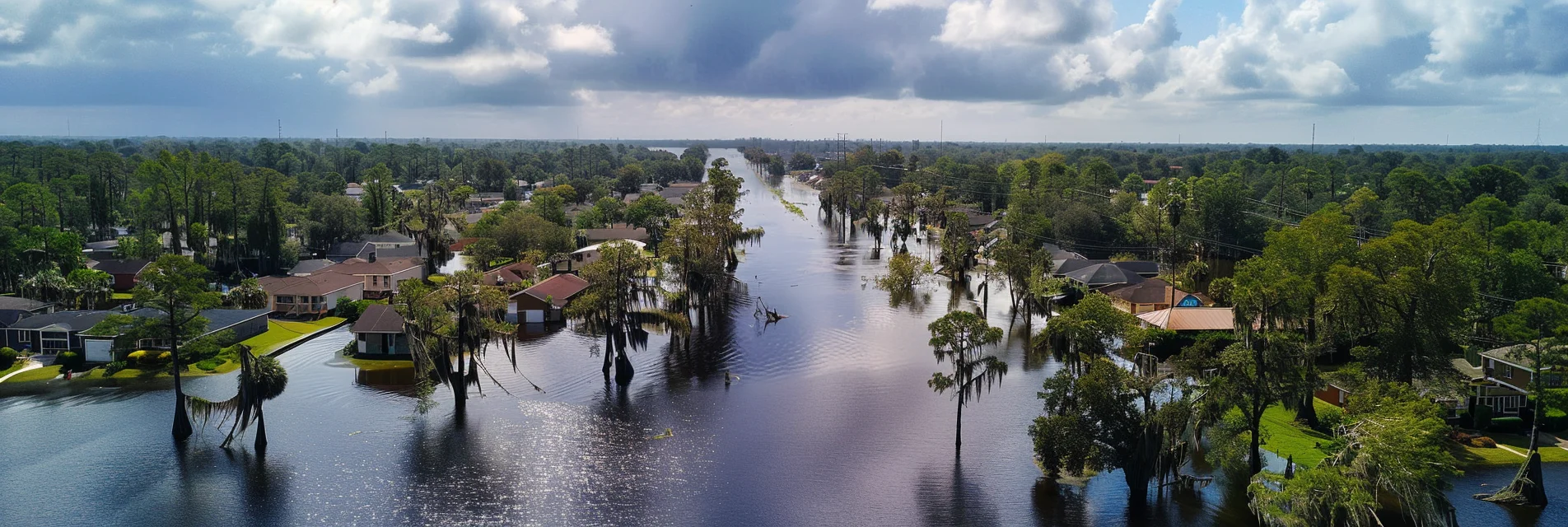
Georgia follows the 2020 Georgia State Minimum Standard Codes (SMSC), based on the 2018 IRC. Coastal counties along the barrier islands fall under enhanced wind-load requirements. Georgia has no state windstorm pool — homeowners must secure private windstorm coverage, which has become increasingly difficult in coastal areas after recent Atlantic storm seasons.
Storm damage on Georgia roofs
Georgia coastal roofs face Atlantic hurricane tracks, tropical storm wind, and the storm surge risk unique to the barrier island geography.
Matthew (2016) and Irma (2017) both produced significant Georgia coastal roof damage despite making Florida landfalls — the storm track brings destructive winds well north of the eye. Georgia's barrier island geography channels storm surge in ways that amplify wind damage to beachfront and near-coast properties.
Inland Georgia is one of the most tornado-active states in the Southeast. Tornado-damaged roofs present the same claim documentation challenges as hurricane damage — dated photos, a licensed inspection, and a written scope are essential before any adjuster visit.
🌀 Recent Georgia storm benchmarks
Matthew (2016) caused major damage across Camden, Glynn, and Brantley counties. Irma (2017) brought tropical-storm-force winds to the entire Georgia coast. Idalia (2023) produced significant wind and surge damage across coastal Georgia counties.
Coastal roof types & how they hold up in Georgia
The right roof for a Georgia coastal home balances wind rating, cost, and local climate exposure.
Architectural shingle
Most common statewide. Class 4 impact-rated shingles are recommended for coastal and tornado-prone areas. Most widely available post-storm.
Metal roofing
Excellent for Georgia's coastal humidity and Atlantic wind loads. Standing seam is the top choice for Golden Isles properties serious about storm resilience.
Tile roofing
Used in some coastal Georgia markets. Heavier installation requires structural review; tiles can crack under hail or debris impact.
📋 Georgia building code overview
Georgia follows the 2018 IRC via the Georgia SMSC. Coastal counties require enhanced wind-load construction. No state windstorm pool — private coverage is essential and has become harder to obtain for coastal properties since 2020.
2026 roof repair & replacement ranges
Ranges reflect 2026 quotes from licensed Georgia roofers. Coastal Chatham, Glynn, and Camden counties run higher due to wind-zone requirements.
| Roof work | Typical range | Best for |
|---|---|---|
| Minor storm repair | $375 – $1,500 | Missing shingles, flashing, small leaks |
| Section / slope replacement | $1,500 – $6,000 | Wind or hail damage, one slope |
| Full roof replacement | $8,500 – $25,000+ | Major hurricane damage, full replacement |
Private windstorm coverage is required for coastal Georgia properties — compliant roofing installations are essential to maintaining eligibility.
Your roofing product or service here. Reach homeowners actively comparing storm-damage roofing options across 13 coastal states. High-intent audience, zero waste.
Storm roof claims in Georgia
Georgia allows 2 years from the storm date to file a claim — documentation and prompt filing are critical.
Georgia's coastal insurance market has tightened after a string of Atlantic storm seasons. Several private insurers have added named-storm deductibles or reduced coastal limits. Know your policy's hurricane deductible trigger before storm season — and document your roof's pre-storm condition every year.
💰 Wind & storm discounts in Georgia
Georgia insurers offer premium credits for wind-resistant construction features. Roof shape, deck attachment, and opening protection all factor into rate calculations. A post-upgrade inspection documenting these features can produce meaningful annual savings.
Two numbers decide most of what a claim is worth: the hurricane deductible your policy applies, and whether a coinsurance penalty reduces the payout. Both are worth working out before you sign anything, alongside current roof replacement costs.
What to do once it's safe
Stay safe & tarp if needed
Don't climb a damaged roof. Cover active leaks from inside and call a pro for emergency tarping if water is actively entering. Step-by-step tarp guide →
Document everything with dates
Take dated photos of all visible damage — roof surface, ceilings, walls, attic, and any affected belongings. Date and timestamp are critical for claim correlation.
Hire a licensed roofer to inspect
A licensed local roofer assesses hidden damage — shingle seal failure, deck saturation, flashing separation — and produces a written report for your claim.
File within your window
Submit your claim promptly with the inspection report. File within your policy's notice window — earlier documentation always produces stronger outcomes in Georgia.
Why act now in Georgia
Georgia's 2-year claim window and active Atlantic storm season mean prompt inspection is always the right move. A licensed inspection now creates the dated baseline that helps support your claim from wear-and-tear disputes.
How to verify a roofer in Georgia
After any major storm, unlicensed contractors target affected neighborhoods. Here is how to protect yourself.
Georgia roofing contractors must be licensed through the Georgia Secretary of State. After Atlantic storms and tornado events, unlicensed storm chasers target Georgia neighborhoods. Verify licensure at verify.sos.ga.gov before signing anything.
Verify state license
Check the state licensing board before signing anything.
Confirm insurance
Ask for a certificate of liability and workers' comp.
Use a local roofer
Local contractors know your county's permit process and are accountable after the job.
Licensed & insured
Independent, ad-supported storm-damage roofing guidance for Georgia homeowners — local codes, damage documentation, and how to vet a contractor yourself. Roofing companies may advertise here, clearly labeled.
State licensed
Contractors advertising here represent themselves as state-licensed. Always verify before signing — check verify.sos.ga.gov ↗
Fully insured
Contractors represent themselves as carrying liability and workers' compensation insurance. Ask for certificates and verify before signing.
Local experience
Pros who know Georgia code, your counties's permit office, and local claim patterns.
Georgia counties we cover
Pick your county for its storm history, wind zone notes, 2026 pricing, and licensed roofers near you.
How to hire a licensed Georgia roofer
StormRoofQuotes is an independent, ad-supported information resource. We don't arrange inspections or refer you to any contractor — the guides below explain how to document damage and hire a licensed local roofer yourself.
StormRoofQuotes is an independent, ad-supported information resource. We publish storm-recovery guides and clearly-labeled roofing advertisements. We do not arrange inspections, take commissions, or refer you to any contractor.
How this site works →