Some links on this page are affiliate links and we may earn a commission if you buy through one. It costs you nothing extra. Nothing in the safety sections is influenced by it, and we have left out products we would not put in our own house.
🌡️ Sixty-Two Degrees
Everybody knows what hypothermia is. Almost everybody pictures it wrong.
They picture a mountainside, or a man who went through the ice on a pond. Something dramatic, outdoors, and well below freezing.
The National Institute on Aging says to set your thermostat to at least 68 or 70 degrees, and that even mildly cool homes — sixty to sixty-five degrees — can bring on hypothermia in older adults.
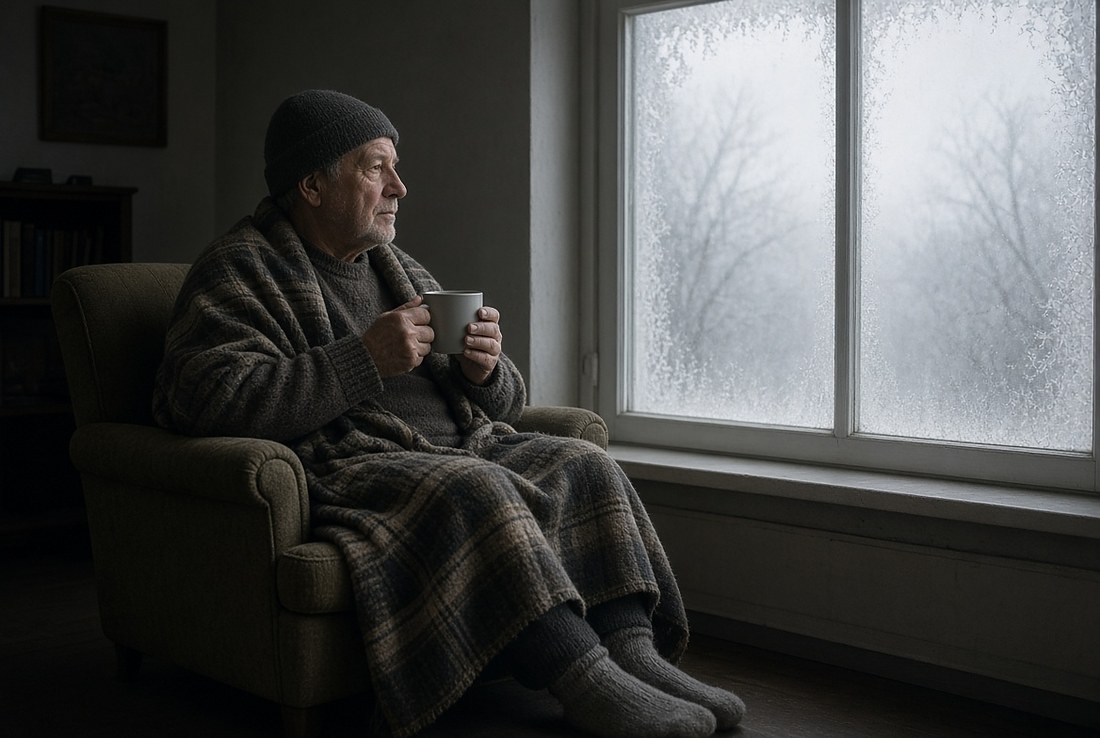
Sixty-two degrees. That is not a mountainside. That is a living room in February with the heat turned down to keep the bill honest, and a good many people reading this have sat in exactly that room and called it chilly.
There is a reason it lands harder on older people, and it is arithmetic rather than frailty. A body at seventy runs a little cooler to begin with — normal temperature drifts down about half a degree with age — so there is less road between where you start and where you are in trouble. On top of that the body's own response to cold gets blunted, by ordinary chronic conditions and by ordinary medicines that nobody thinks of as heating equipment.
And here is the cruel part. The early signs of getting too cold are confusion and sleepiness. The condition that needs you to get up and do something about it is the same condition that quietly persuades you that you are fine where you are, and would rather not.
One more thing worth saying because it is exactly backwards from what people believe: a drink does not warm you. It moves blood out to the skin so you feel warmer while you lose heat faster, and it makes you less likely to notice or act.
🔌 Your Furnace Runs on Electricity
Ask a man with a gas furnace what he will do in a long winter outage and he will very often tell you he is fine. He has gas. The gas does not go off.
The gas does not go off. The furnace does.
A modern furnace needs electricity for the ignition, for the controls, and above all for the blower — the fan that pushes the warm air through the house. No power, no fan, no heat in any room you actually sit in. The fuel is still in the line and the tank outside is still full and the house still goes cold.
The same is true of most oil furnaces, most heat pumps, most boilers with a circulating pump, and every pellet stove ever made.
And whatever is making the heat, a quarter to a third of it leaves through the glass. Insulating the windows is the cheapest thing you can do about that, and the panels work in July as well.
And a house that is going cold has a second problem arriving behind the first one: the plumbing. Pipes freeze at about twenty degrees, and the burst does not happen where the ice is.
So the question is not what fuel you have. It is what in your house makes heat with no electricity at all. For a good many people the honest answer is nothing, and it is far better to learn that on a mild afternoon in September than at nine o'clock on the second night.
Go and find out this week. Not by reading the manual — by asking one question about each heat source in the house: if the power is off, does this still make heat? A wood stove does. A vented gas fireplace with a standing pilot usually does. A gas fireplace with an electric ignition usually does not. Central heating of any kind almost never does. It takes ten minutes and it costs nothing, and it is the whole of the planning.
🚪 One Warm Room
We have a page on this site about the one cool room in summer, and the winter version is the same idea wearing a coat.
You are not trying to heat a house. You are trying to heat a room, and you are trying to heat it with the people in it.
Pick the room first, and pick it before you need it. The rules are plain. Small beats large. Interior beats exterior. Fewest windows wins. Below the top floor if you have a choice, because heat leaves through a cold roof faster than through anything else. And it wants to be a room you can bear to be in for four days, which rules out a good many basements and every laundry room in the country.
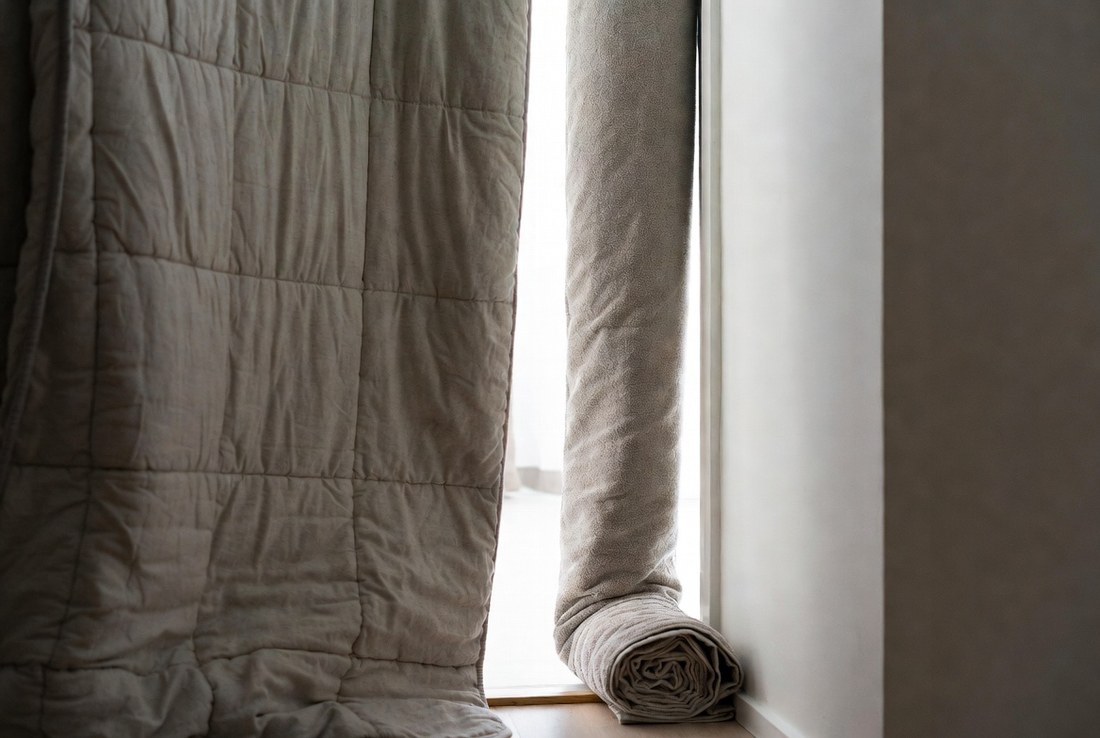
Then shut it up. Close the door and hang a blanket or a quilt over the doorway, because a door leaks around all four edges and a quilt does not. Roll a towel along the bottom. Draw the curtains at dusk and open them again in any sunshine you get, because glass gives heat away all night and gives some of it back in the middle of the day.
Put everybody in the same room, including the dog. Bodies are heaters — poor ones, but free, and they run all night without fuel. Sleep in there. A bed in a warm room beats a warm bed in a cold one, because the moment you get up in the night is the moment the cold gets you.
Layers on the person, not just on the bed. Long underwear, socks, slippers, and a hat indoors, which looks ridiculous and works better than almost anything else in this list.
🏠 When It Is Not an Outage — It Is Just Not Heatable
Everything above this assumes a storm. The power is off, it will come back, and you are getting through four days.
But a great many people do this every single winter with the power on the whole time, and nobody writes that version down. The furnace works. The house simply cannot be heated — because the bill is impossible, or the boiler is old and undersized, or it is a big draughty place built for a family that has long gone, or there is one room on the north side that has never been warm since the day they moved in.
So they shut doors. They live in the kitchen and one bedroom, and the rest of the house is a cold place you walk through quickly. That is the same tactic as the one above, and the mechanics of it do not change: small room, interior if you have the choice, quilt over the door, towel along the bottom, curtains drawn at dusk, everybody in together, layers and a hat.
What changes is that it is a season rather than a weekend, and four things start to matter that did not matter over four days.
1. The arithmetic, which catches almost everybody out
Here is the thing that gets assumed and is very often wrong: that heating one room with a plug-in heater must be cheaper than heating the house.
It depends entirely on what the house runs on, and the gap is not small. Put every fuel on the same footing — the cost of a million BTUs of heat actually delivered into the room — and at recent national average prices from the Energy Information Administration it comes out roughly like this:
Every electric heater sold is essentially the same device — a coil turning electricity into heat — so the 1,500-watt one in the corner and the fan heater and the oil-filled radiator all cost the same per hour to run, whatever the box says about efficiency. Electric resistance heat is the most expensive common way there is to make heat, by a factor of three or more against gas.
Which produces the trap. If your house is heated by gas, shutting the furnace down and running an electric heater in one room can cost you MORE than simply heating the house did. You have swapped the cheapest heat in the country for the dearest one, and the saving only appears if you have turned the whole-house thermostat down a very long way at the same time. If your house already heats electrically — baseboards, an electric furnace, wall units — then the sums are simple and closing rooms down genuinely saves money, because you are buying the same expensive heat either way and simply buying less of it.
The hourly figure is worth knowing because it is easy to check against your own bill. A 1,500-watt heater uses a kilowatt and a half every hour it is actually on. At the recent national average of about 19 cents a unit that is around 28 cents an hour — near enough $7 a day, or $200 a month, if it runs continuously. In the cheapest states it is closer to $130. In the dearest it is over $300. Look up your own rate on your own bill and do that one multiplication before you decide this is the economical option, because for a lot of households it is the opposite.
A thermostat on the heater, and a room that has been sealed the way this page describes, cut that figure hard — the heater is only costing you money in the minutes it is actually drawing power.
2. Heat the person before you heat the room
Here is the cheapest sixty-eight degrees there is, and it is not sixty-eight degrees at all.
For sitting and for sleeping — which is most of an older person’s winter evening — you do not need the air in the room at 68. You need you at 68. A heated throw over the knees in the chair, and a heated mattress pad under the sheet at night, put the heat where the body is instead of into the ceiling, and they do it on a fraction of the power.
The arithmetic is worth doing once. A heated throw or blanket draws somewhere between 60 and 200 watts. A space heater on high draws 1,500. At the national average price of electricity, a hundred-watt blanket running all night costs about fifteen cents. The heater running the same eight hours costs over two dollars. Same night, same warm body, one-fifteenth of the bill — and this is true with the power on and the furnace working, not only in a storm.
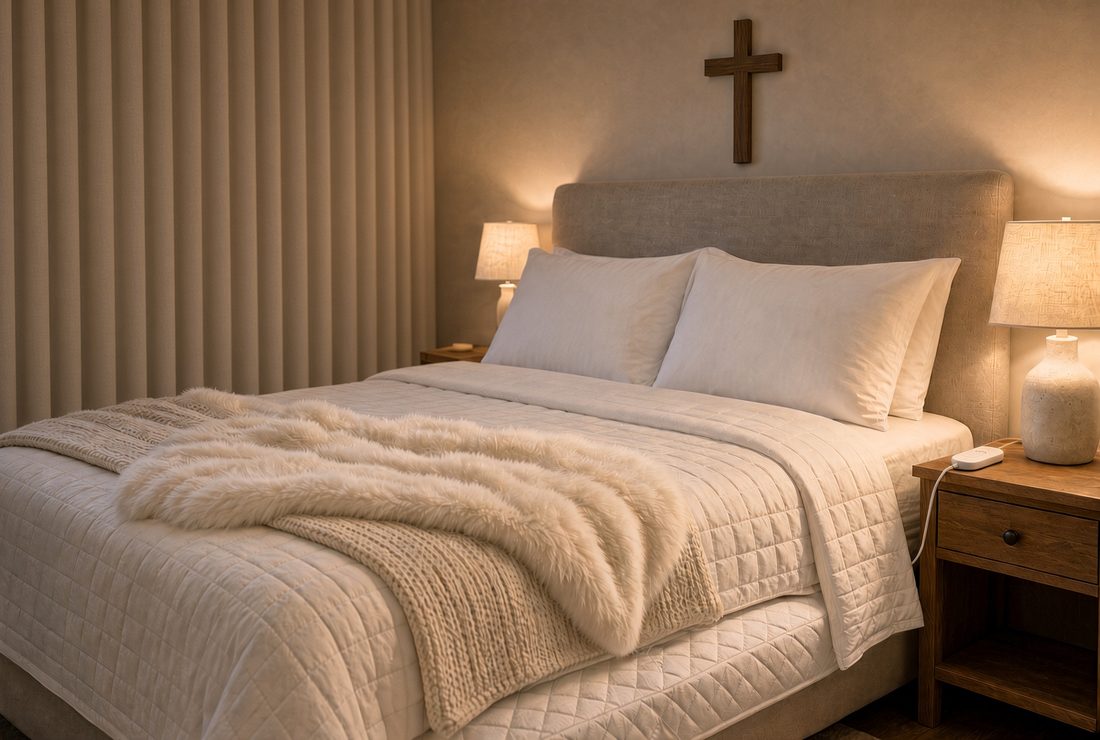
So the order, if the money is tight: the pad and the throw first, for the hours you are sitting or lying down. The room heater only for the hours you are up and moving about in it, on its thermostat, in a room you have sealed. That is how a house on a gas furnace gets around the trap in item 1 — the heater is hardly running, and the blanket costs pennies.
Two rules on heated bedding, and they are old ones. Never fold, bunch, or tuck a heated blanket or pad while it is switched on — heat trapped against the wires is how the old ones caught fire. And if you have lost feeling in your feet or legs, as diabetes can do, keep it on low and check your skin, because you will not feel a burn coming. Buy one with an automatic shut-off; nearly all of them have one now.
3. The rooms you closed still have pipes in them
This is the one that turns a saving into a bill, and it happens in February to people who have got through January beautifully.
Do not let the closed-off parts of the house fall below about 55 degrees. That is the floor, and it is not about comfort in rooms nobody is sitting in — it is about the plumbing inside the walls of those rooms, and about the bathroom on the north side with a pipe running up an outside wall. A burst supply line undoes several winters of careful saving in an afternoon.
Which means the doors of unheated rooms get opened for a while on the coldest nights rather than shut tighter, and the cabinet under any sink in a closed room gets left open. We go through the whole of that, including what to do when it has already happened, on the frozen pipes page.
4. Damp, which is a season problem and not a weekend one
Four days of a sealed room does nothing. Four months of one is a different matter, because people put a great deal of water into the air simply by living — breathing, cooking, washing, drying clothes — and in a shut room with cold walls that water has somewhere to go. It condenses on the coldest surface it can find, which is usually the outside wall behind the furniture or the window reveal, and then it grows something.
It is not difficult to manage, but it has to be done deliberately:
Keeping the one warm room dry
5. And the floor that is not about money at all
The section at the top of this page is the one that matters most here, and it needs saying again in this context rather than the storm one. The National Institute on Aging puts the recommended indoor temperature at 68 to 70 degrees, and says plainly that even mildly cool homes — sixty to sixty-five — can bring on hypothermia in older adults.
Four days at 58 degrees in a coat is thrift. Four months at 58 degrees is a medical problem that arrives so slowly that nobody in the house notices it beginning.
That is the honest line on this whole tactic, and it is why the section does not end with a money-saving tip. One warm room is a good answer to a house you cannot heat. It is a bad answer to a bill you cannot pay, because there are better ones and almost nobody uses them.
Two federal programmes exist for exactly this household. One pays toward the heating bill and one insulates the house for nothing, and older households are given priority by federal rule in both. There are also arrears and debt-forgiveness arrangements at most utilities that are never mentioned unless you ask, and winter shutoff protections in a good many states. It is all set out on the page about help paying your utility bill.
And the permanent version of this argument, which belongs on a site called Buy It At 50: a heater is a bill every month for the rest of your life, and insulation is bought once. Weatherization money does not have to be paid back. A caulk gun and a weekend of sealing the gaps around the windows, the doors, the loft hatch and the holes where pipes come through costs less than one month of that heater and works every winter afterwards, in every room, without being switched on.
🔥 What Actually Heats It
Now to the machinery, in rough order of how much I would trust it in a house with older people asleep in it.
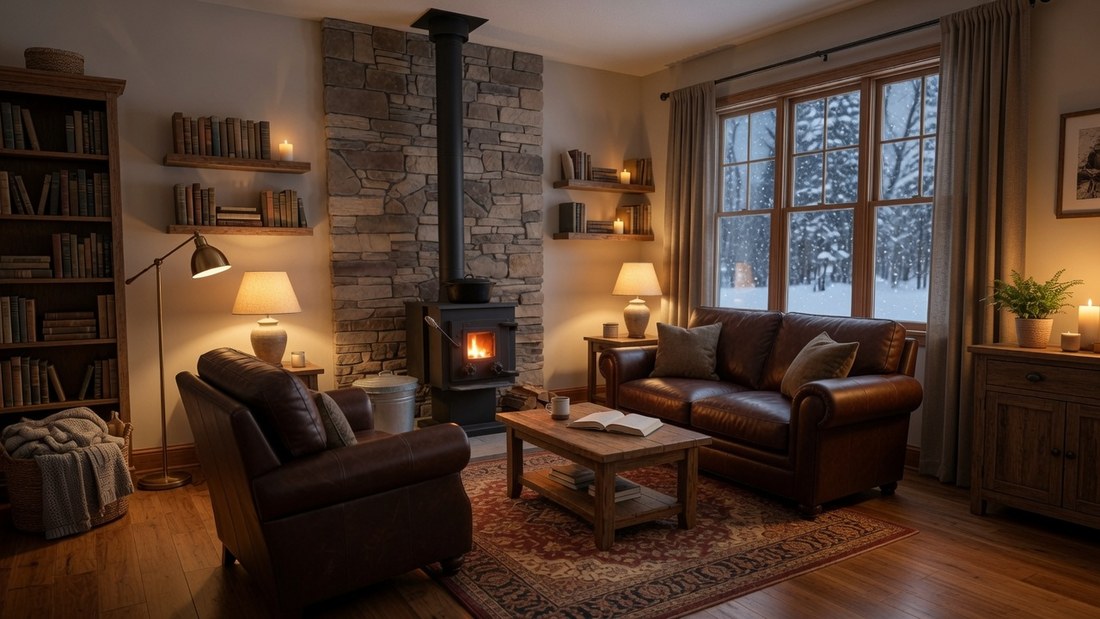
A wood stove, if you already have one
Nothing else on this list makes heat for days with no fuel line, no cord and no fan. It also cooks, and boils water, and gives light, which is four jobs from one object — and our firewood page will tell you why the wood you burn wants to have been split and stacked a year ago rather than bought green in January.
The buying decision belongs at fifty, and the installing decision belongs to somebody else. A stove is chimney work, clearance work and usually a permit, and it is on this site's short list of jobs we tell you plainly not to do yourself. Have it put in properly, then have the chimney swept every year by a man who does it for a living. Creosote is what turns a stove into a house fire, and it builds quietly for a whole season without ever announcing itself.
And look at the floor when somebody quotes you. A stove needs a hearth pad under it and well out in front of the door — what comes out of a firebox when you open it does not fall straight down. A stove standing on carpet is not a stove, it is a house fire that has not got round to it yet.
Electric heat, if you have a generator
This is the one people overlook, and it fits the argument the rest of this site already makes. An electric heater puts out no carbon monoxide whatsoever. None. It is the only thing on this page you can run in a closed room and go to sleep beside.
It costs you watts, and a 1,500-watt heater is a real load — work it out on the generator calculator before you count on it. But this is the winter version of what our electric skillet page argues about cooking: run the engine outside and bring the electricity in, rather than bringing the flame in.
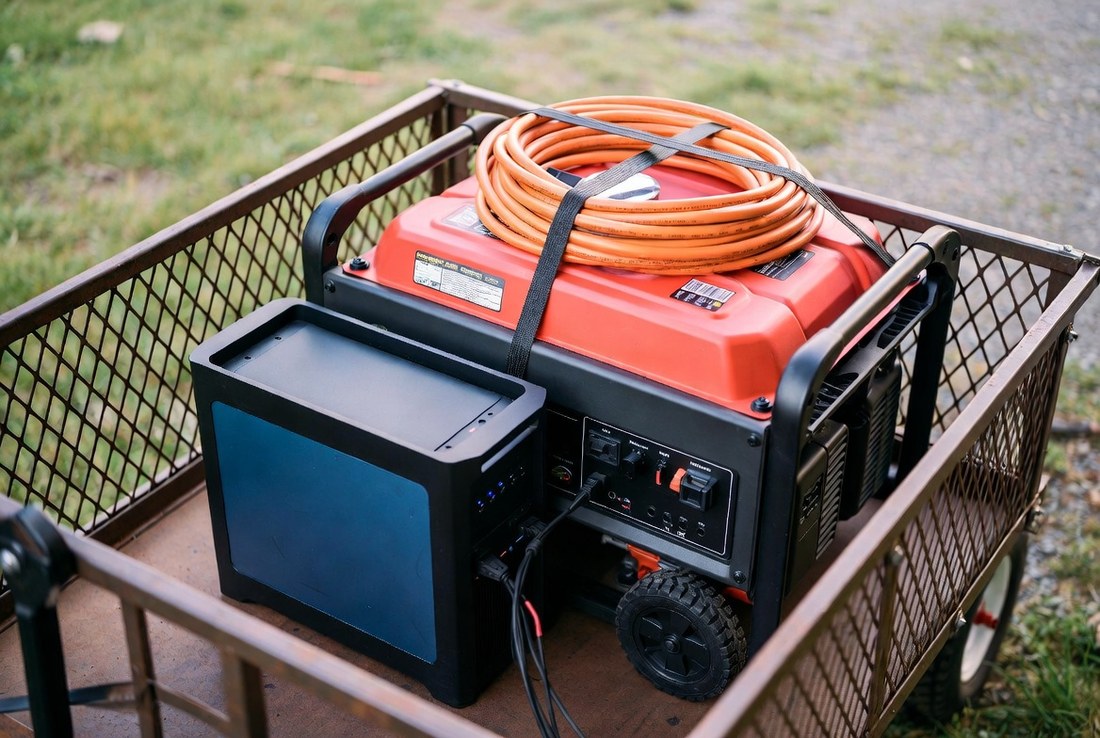
Follow the plain rules that come with them. Three feet of clear air on every side — beds, curtains, papers, sofas. A level surface where it cannot be knocked over. Straight into a wall outlet, never a power strip, and never a cord run under a rug.
A vented fireplace or gas heater
Vented means the combustion products go up a flue and out of the house, which is the entire point and the thing worth paying for. If it has a standing pilot it will usually work without power. If it lights electrically it will not.
Kerosene and vent-free gas
These get their own section, because the honest treatment of them takes more than a paragraph.
🔌 Nothing Is Coming — So What Actually Makes Heat?
Take away everything at once, which is the situation people actually write in about. The power is off. The gas main is not flowing. The big propane tank outside is empty, or the truck cannot get down the road. No wood stove, because most houses do not have one. What is left?
Here is the honest ranked answer, and the ranking is by how likely it is to kill you, not by how warm it makes the room.
First: the heat that involves no flame at all
Everything in this tier can run in a closed room with the door shut and everybody asleep, because nothing is burning. That is the only category where that sentence is true, so it goes first.
No combustion, no exhaust, no alarm required
The one caution on hot water bottles, and it is the same one as the hand warmers. Hot, not boiling — boiling water perishes the rubber and splits the seams. Never against bare skin; put it inside a cover or under a layer. And not in the bed of anybody who cannot feel their feet properly or cannot move it away, because a low-temperature burn does its damage slowly in somebody who never notices it starting. Fill it, warm the bed with it, and take it out before the person gets in if there is any doubt at all.
Second: the portable propane heater, which is what most people end up with
With the bulk tank empty and the main dead, the device that actually turns up in this situation is a small radiant propane heater running off the little one-pound camping cylinders. It is worth being straight about it rather than pretending it does not exist, because millions of them are sold and a great many people will reach for one.
These can be used indoors — some of them. And the difference between the ones that can and the ones that cannot is the difference between a cold night and a funeral.
“Portable” does not mean indoor-safe. “Camping” does not mean indoor-safe. The Consumer Product Safety Commission says the indoor-rated ones can be identified by wording on the packaging: “Designed for Indoor Use”, “Low Oxygen Automatic Shut-Off System”, “Oxygen Depletion Sensor”, or a star mark reading CSA 4.98. Older heaters without an oxygen depletion sensor are outdoor-only and must never be used inside, not once, not briefly. The CPSC traced a run of deaths to exactly that — radiant camping heaters on one-pound cylinders carried into tents and campers by people who had no idea there were two kinds.
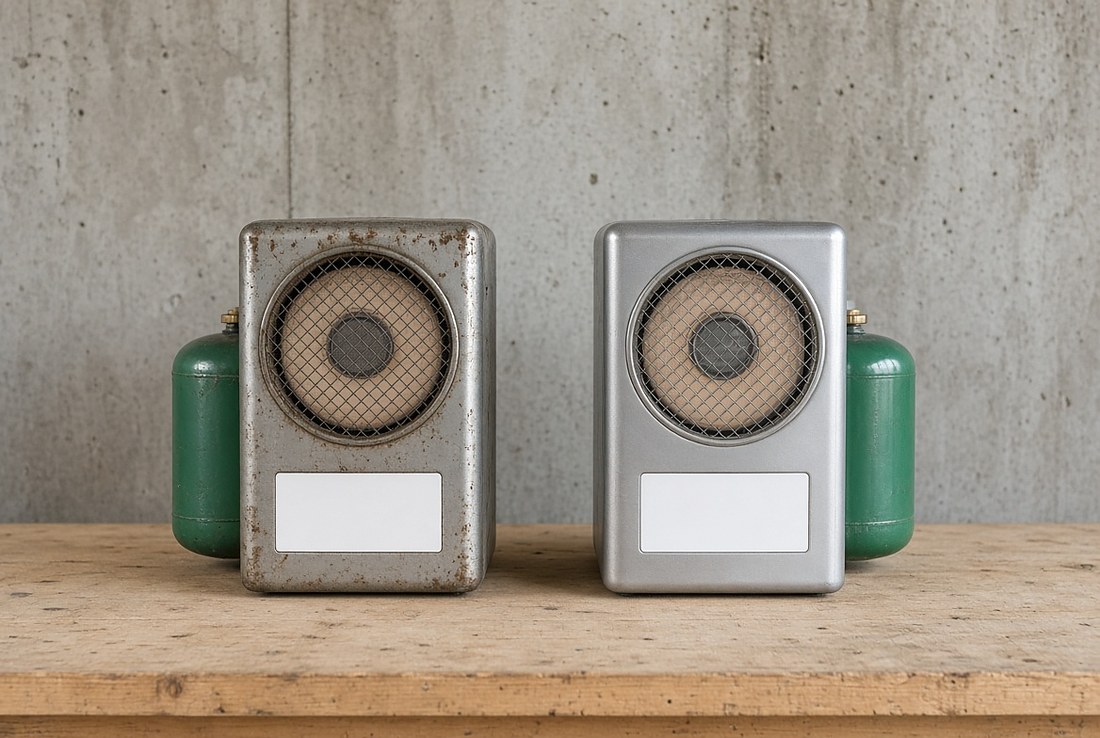
If you own the right kind, the rules that come with it are not optional and they are not suggestions:
Running one without hurting anybody
And one thing almost nobody knows, which belongs beside the oxygen-sensor point in the next section. A carbon monoxide alarm detects carbon monoxide — the product of burning. It does not detect unburned propane leaking from a cylinder, a hose, a regulator or a fitting. Those are two different gases and two different alarms. If you smell gas, that is not a job for the CO alarm: leave the switches and the lights alone, get out, and call from somewhere else.
On fuel: the one-pound cylinders are the ones to stock, because they are the thing still on a shelf when everything larger has failed. Buy them before the season rather than during it, and store them outside the living space — a shed, a detached garage, not the closet in the room you are heating. Your own manual and your local code have the final word on that, and they are worth a look in October.
Third: kerosene, which has its own section
Unvented kerosene is the other device that genuinely turns up in this scenario, and it comes with the same shape of rules plus one of its own about fuel grade. That is set out immediately below, along with the sensor everybody misunderstands.
And the one that circulates every winter and does not work
The tea lights under an upturned flowerpot. It goes round the internet every cold snap, it looks clever, and it is worth understanding why it is not.
A clay pot does not make heat. It cannot — there is no energy in it. All it does is take the small amount of heat a few candle flames are already producing and hold it a while, so the pot gets hot and feels impressive while the room it is in gets no warmer than the candles alone would have made it. Which is very little: a handful of tea lights is a tiny heat source next to a room losing warmth through its walls, its windows and its doors.
What you have actually built is several open flames on a table, under a heavy ceramic object, in a house full of blankets, in the dark, with tired people moving around it. The heat is negligible and the fire risk is not. Burn candles for light if you must, carefully and never unattended — but nobody should be counting on them for warmth.
So the short answer to the question. Warm the people first with what cannot fail — layers, blankets, hats, something underneath them, food and hot drink. Then a battery and a heated throw, or a hot water bottle filled from a flame kept outdoors. Only then an indoor-rated ODS heater, by the manual, with a CO alarm in the room and switched off before anybody sleeps. And everything on the list with no exceptions further down stays off the table however cold it gets, because the people that list is written about were cold too.
⚖️ The Sensor That Does Not Do What You Think
Millions of American households heat with unvented kerosene or vent-free gas, and a page that simply told them not to would be no use to the people who most need reading it. So here is the straight version.
Unvented means the exhaust goes into the room. That is not a defect. That is the design.
Everything that comes off that flame — carbon monoxide, nitrogen dioxide, carbon dioxide, and a surprising quantity of water vapour — comes out into the air you are sitting in. The damp windows people notice in a room with one of these running are not a coincidence. They are the exhaust.
These heaters are required to carry an oxygen depletion sensor, and the sensor is a real thing that does a real job: if the oxygen in the room falls to somewhere around eighteen per cent, it shuts the gas off.
Now the sentence this section exists for.
Read This Twice
The oxygen depletion sensor does not detect carbon monoxide. It measures oxygen. Those are two different gases and two different problems, and a room can fill with carbon monoxide while the oxygen level is perfectly satisfactory and the sensor sits there doing nothing, because nothing is what it is built to do about carbon monoxide. An ODS is not a substitute for a carbon monoxide alarm. It never was.
If you are going to run one, then: it needs a carbon monoxide alarm in the room with it, and a window cracked, and it does not run in a bedroom or while anybody is asleep. Kerosene wants 1-K grade fuel and nothing else — never gasoline, not once, not in an emergency. Refuel it outside, and only when it is cold. A faint kerosene smell when you come in from outdoors is normal. A strong one means stop and go out.
And check your own local code before you buy, because this is one of the places where the law genuinely differs from one place to another. California has banned unvented appliances. A good many jurisdictions forbid them in bedrooms. Some states allow them only with particular safety devices fitted. We are not going to print a fifty-state table we cannot keep current — ring your building department or your fire marshal and ask, which takes one telephone call.
🛑 The List With No Exceptions
The rest of this page has some give in it. This part has none, and it is written flat on purpose.
Never, Under Any Circumstances, For Any Length of Time
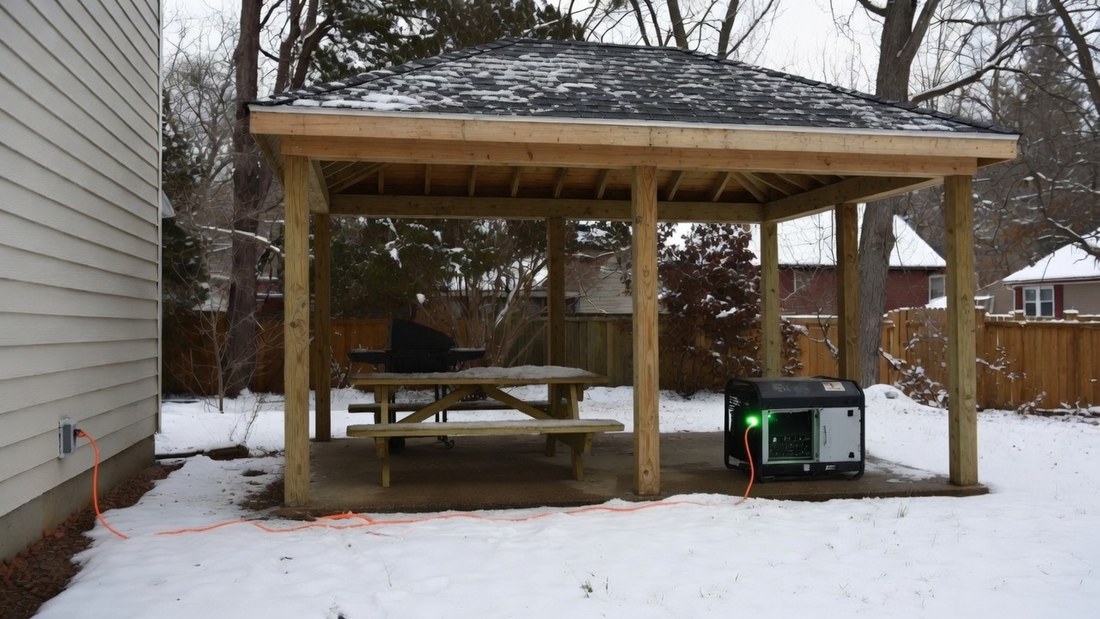
Never run a generator indoors. Not in a garage, not in a basement, not in a crawlspace, not in a shed, not on a porch and not in a carport. Outside only, at least twenty feet from the house, with the exhaust pointed away from it and the windows and vents near it shut. Opening a door or a window does not make an enclosed space safe — the Consumer Product Safety Commission says so in those words, and generators alone kill somewhere around eighty-five to a hundred Americans a year.
Never heat a room with a gas oven or a cooking range. They are not built to run for hours and they are not vented for it.
Never bring a charcoal grill indoors, or into a garage. Charcoal produces carbon monoxide the entire time it is lit, including while it is only glowing and looks nearly out.
Never use a camp stove or a propane cylinder heater made for outdoors inside a house. If the packaging does not say indoor-safe, it is not.
Never sleep in a running car for warmth, and never run one in a garage even with the door open. Snow banked around the exhaust pipe of a parked car will put the fumes back inside it.
One more, and it is winter-only so it catches people who are otherwise careful. After heavy snow, go out and clear the snow away from the outside vents of your furnace, water heater and dryer. A blocked vent sends the exhaust back into the house from an appliance that has been perfectly safe for twenty years.
🚨 The Twenty-Dollar Thing That Does the Most
Everything above is judgement. This part is a purchase, and it is the cheapest item on this site with the largest consequence.
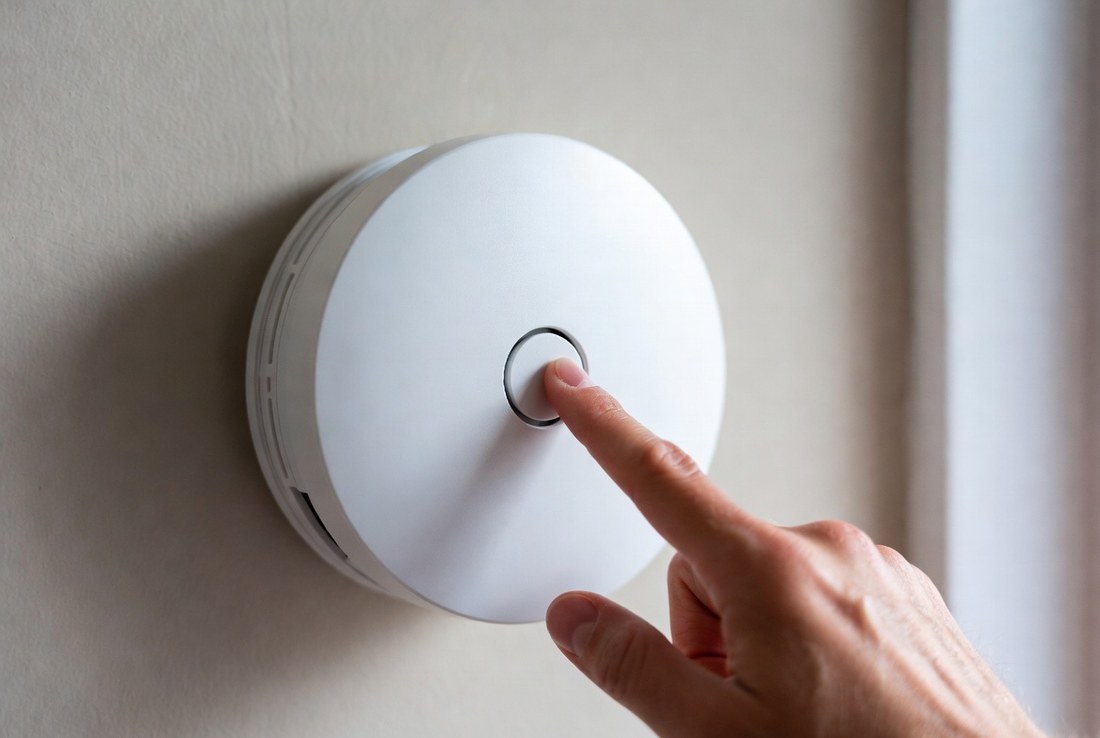
Carbon monoxide has no color and no smell and gives no warning at all. What it does give you is symptoms, and this is the part that kills whole households: they are the symptoms of flu. Headache. Dizziness. Tiredness. Nausea. Everybody in the house feeling poorly at once, and a family that decides there is a stomach bug going round and takes themselves off to bed.
Two things are worth knowing about that. Everybody getting ill at the same time is a signal in itself. And if everybody feels better when they go outside and worse when they come back in, that is not a bug. Get out and stay out and ring the fire department.
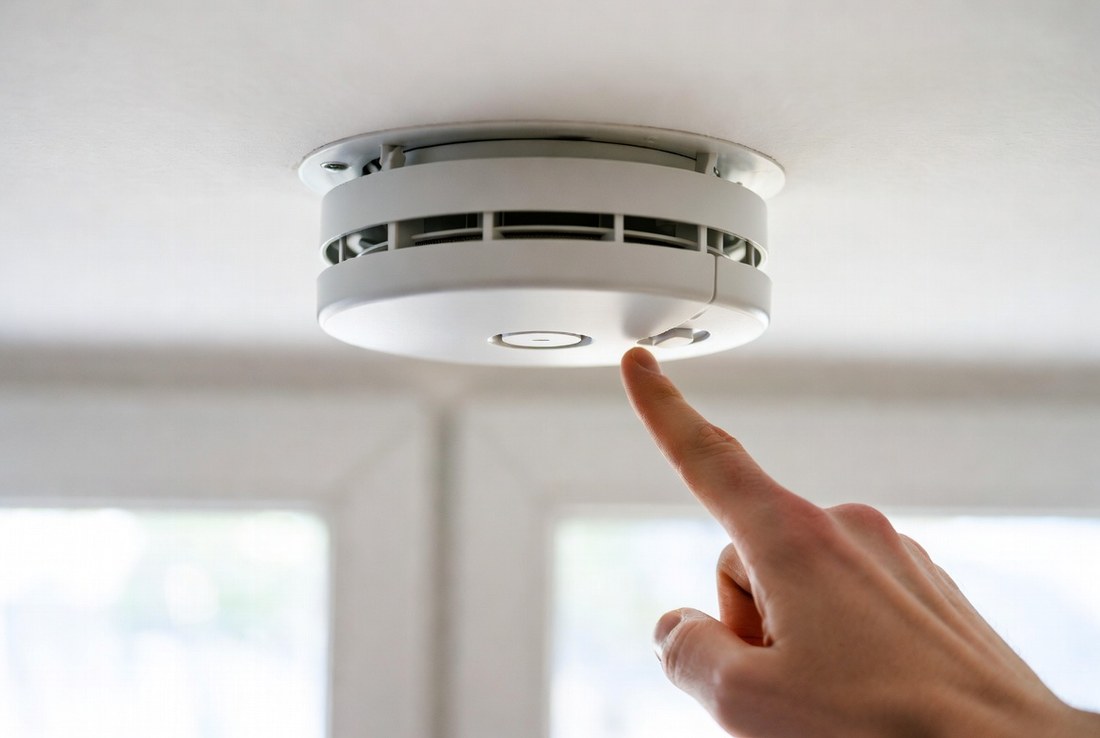
Buy them for every level of the house and for outside every sleeping area. Test them monthly. And check the date on the back, because the sensor in a carbon monoxide alarm wears out on a schedule whether it has ever been triggered or not — most of them are done at somewhere between five and ten years, and an expired alarm on the ceiling is worse than no alarm at all, because it is doing the job of making you feel covered.
If you heat with anything that burns — wood, gas, oil, propane, kerosene — this is not optional equipment and it is not a winter-only purchase.
🚨 When It Goes On for Days — What Texas Actually Showed
Everything on this page so far assumes the room holds until the power comes back. Usually it does. February 2021 in Texas is what it looks like when it does not, and it is worth going through properly, because the official numbers say something very specific about who died and where.
The Texas Department of State Health Services published a final count: 246 deaths, across 77 counties, of people aged from under one year old to a hundred and one. Here is what killed them, in order.
Two-thirds of it was the cold. And of the hundred and sixty-one who died of cold exposure, a hundred and twenty-five were sixty or older.
They were not caught outdoors in a blizzard. They were in their own houses, with the doors shut, in a state where houses are not built for this — and the temperature inside came down to meet them.
That is the entire argument of this page in one line of a state health department report, and it is the reason the section at the top about sixty-two degrees is not an exaggeration.
Look at the rest of the list too, because every single cause on it is something this page has already told you about. Nineteen carbon monoxide deaths — people running cars, grills and generators for warmth, which is the list with no exceptions further up. Ten fires. Nine falls. And twenty-five from existing illness made worse by the storm — dialysis missed, oxygen concentrators stopped, medicine that needed refrigerating or a machine that needed power.
Plan in days, not hours
The other thing Uri settled is how long. A University of Houston survey afterwards found that of the Texans who lost power — about seven in ten of them — the average outage ran around 42 hours, 31 of them unbroken. Of the half who lost running water, the average was about 52 hours. Those are averages. Plenty of households were a long way past them.
So the unit to plan in is days. And the thing that made it different from an ordinary storm is that there was nowhere to go. It was not one neighbourhood off while the next one was fine — it was most of a state, with the roads iced, the shops shut, and the relatives you would normally drive to sitting in the cold as well.
The decision nobody plans for: when to stop holding the room
Here is the part that is missing from almost everything written about this, including, until now, this page.
One warm room is a bridge. It is not a destination. It is very good for a night or two, and the longer it goes on the more it depends on things running out — fuel, battery, the warmth stored in the fabric of the house, and your own body's ability to keep making heat, which is the one that quietly gets worse with age and which nobody monitors.
So decide, in advance and in daylight, what would make you leave. These are the honest triggers:
Go, rather than hold, if any of these are true
And know where you would go before you need it, because that is a telephone call you do not want to be making at midnight on a dying phone battery.
Where people actually go
The equipment side of all this — how many hours of battery a machine really has, what a small generator can and cannot carry, and how long refrigerated medicine keeps — is worked through on the power and generators guide, the CPAP battery calculator and the refrigerated medication plan.
And the plainest reading of those Texas numbers, for anybody who is the older person in the story rather than the one reading about them. A hundred and twenty-five people over sixty died of cold indoors, in a state with help in it, over a few days. Almost none of that was a shortage of information. It was houses that could not hold heat, plans that assumed hours instead of days, and a lot of people alone in rooms where nobody was counting. Two of those three are fixed in October, and the third is fixed by giving somebody your check-in time.
🧠 When You Stop Heating the Room and Start Insulating the People
There is a point in a long outage where the room stops being the thing you are working on. The fuel is finite, the house is going down, and the question changes from how do I warm this air to how do I stop these bodies losing heat.
That is a different problem with a different kit, and almost all of it is cheap. Most of it can be bought second-hand, and the family that already owns it spent very little.
Blankets, and where to get them
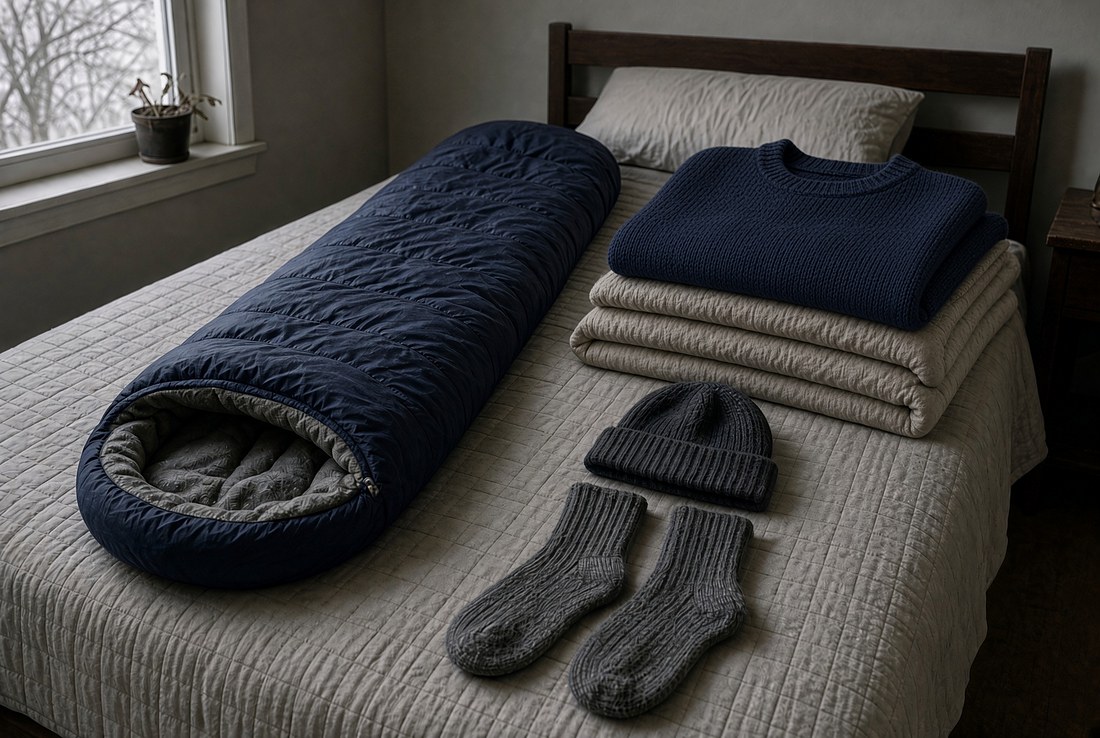
Start with the least fashionable advice on this website. Go to the thrift store, the church shop, the estate sale and the yard sale, and buy blankets. Not for the bedroom. Not to match anything. You are not buying decor and you are not buying fashion — you are buying insulation, and the people who sell it second-hand have no idea that is what it is, which is why it costs almost nothing.
Wool if you can get it, and it is worth going out of your way for, because wool keeps insulating when it is damp and most things do not. Old army blankets, old camp blankets, the heavy ones nobody wants any more. After that, quantity beats quality: several ordinary blankets layered will out-perform one good one, because what does the work is the still air trapped between them rather than the cloth itself.
Anybody who has wintered somewhere genuinely cold knows this already and everybody else finds it out the hard way. A closet with eight spare blankets in it is not hoarding. It is the cheapest thermal storage a house can own, and it never needs charging, servicing or fuel.
A hat for every head — and the reason everybody gives is wrong
You will have heard that you lose forty or forty-five percent of your body heat through your head. That is not true, and it is worth knowing why, because the truth gives you a better rule.
The figure comes from a US Army experiment in the 1950s in which subjects were put in arctic survival suits with only their heads exposed, and unsurprisingly lost most of their heat from the one uncovered part. A 1970s Army manual printed the number, and it has been repeated ever since. The head is about seven to ten percent of your skin, and it loses heat in proportion to that, like everywhere else.
Which does not make the hat wrong. It makes the rule simpler: you lose heat from whatever is uncovered — and the head is almost always the part people leave uncovered.
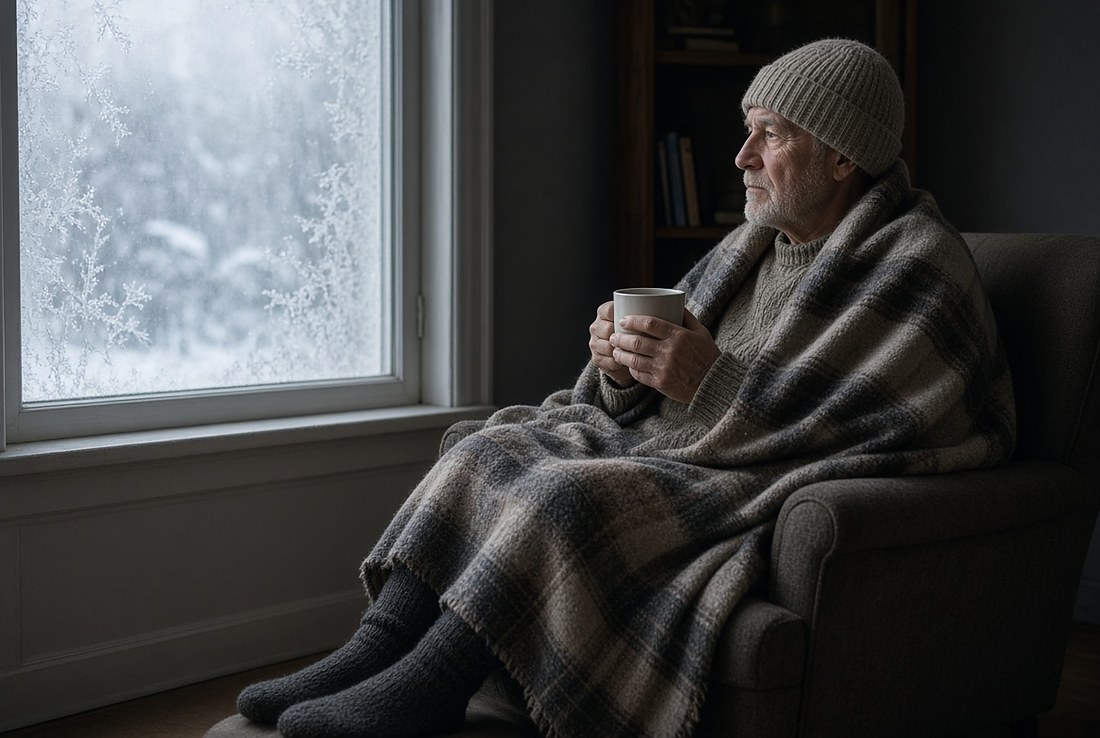
So: a knitted hat for every member of the family, including the ones who will complain about it. They cost a dollar or two second-hand, they take no room, and a hat indoors looks ridiculous and works better than nearly anything else on this list. The same logic puts socks, gloves and a scarf on the same shelf, because a covered head above bare feet is just moving the problem.
Sleeping bags, and the number on the label that is lying to you
A camping sleeping bag is the single best piece of cold-weather equipment a household can own, because it is a portable insulated envelope that needs no power and works on a sofa, a floor or a car seat.
But the temperature on the label needs decoding, and this is where people get hurt. Bags tested to the international standard carry three numbers, not one:
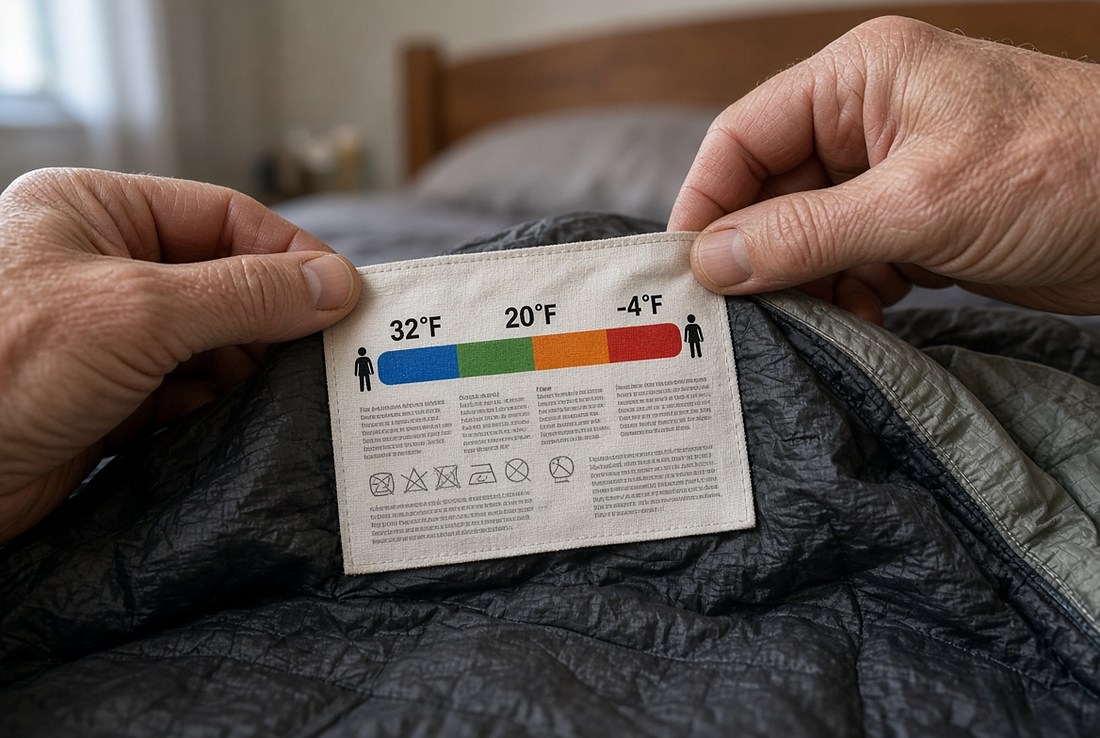
What the three ratings mean
So a bag sold as a “twenty degree bag” is very often quoting the limit, and its comfort rating might be thirty or thirty-five. Buy on that basis and you have a bag that will let you shiver through a night rather than sleep through it.
Which is the argument for buying a great deal more bag than the weather seems to call for — twenty to forty degrees below the cold snaps you actually get. The margin is not timidity. Those ratings are measured on a heated mannequin standing in for a healthy standard adult in thermal balance, and the standard explicitly does not cover sleeping bags made for children. An older body and a child's body both hold temperature differently from the mannequin, and both of them are in the group the Texas figures are about. Buy for the person in the house least able to make their own heat, not for the average.
Mylar blankets — what they do, and what they do not
The foil emergency blanket is two dollars, folds to the size of a deck of cards, and belongs in every go-bag, glovebox and coat pocket in the house. It is also the most misunderstood item in preparedness.
A mylar blanket does not make heat. It has no insulation of its own worth measuring. What it does is reflect radiant heat — your own — back at you, and stop wind and wet carrying it away. That is genuinely useful and it is not the same thing as being warm.
Using one properly
And the one nobody thinks about: whatever you are sitting on
This is the most important paragraph in this section and it is the one that gets left out of every list.
The floor is not neutral. It is either helping you or it is taking your heat away, and a cold floor takes it far faster than cold air does — because your body is pressed against it, and solid contact moves heat out of you at a rate that still air cannot come close to. It is the reason campers carry a mat as well as a bag, and the outdoor industry has a whole separate measurement standard for it. The bag handles the air. Something under you has to handle the ground.
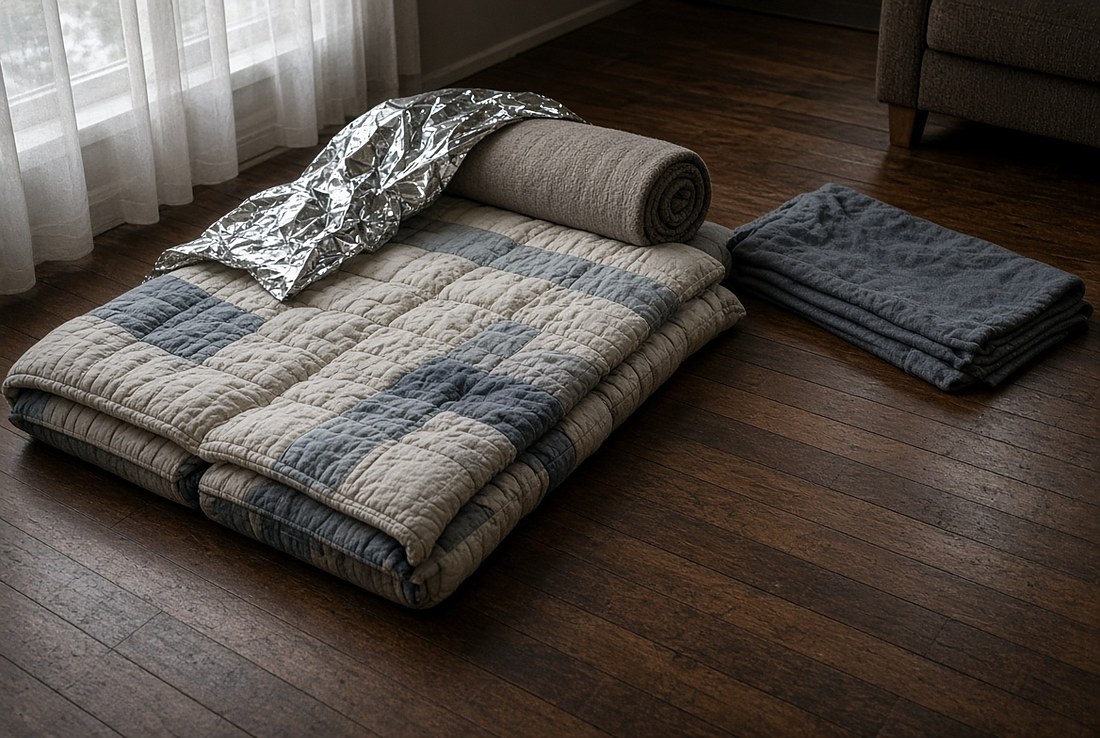
So nobody sits or sleeps directly on a floor, and no child goes on a floor in a foil blanket. That is the exact case where a mylar blanket does the least good and looks like it is doing the most — shiny, wrapped up, and quietly losing heat straight down into the boards. Get something under them: couch cushions, a folded quilt, a camping mat, a rug rolled double, even flattened cardboard, which costs nothing and works far better than it has any right to. Off the floor entirely — on the sofa, on a mattress dragged in — is better still.
Chemical hand warmers, and the burn they can give you
The little air-activated packets are iron filings, salt, charcoal and vermiculite. Open the outer wrapper, air gets in, the iron oxidises, and you get several hours of gentle heat from something that costs under a dollar and stores for years.
They are very good at one job: hands, feet and pockets. A pair in the gloves and a pair in the boots makes a cold room bearable for a person sitting still, which is exactly the situation this page describes. They are not a heat source for a room, and they should never be treated as one.
Now the part that matters for this audience in particular.
These can burn you, and the burn does not feel like a burn while it is happening. A low-temperature burn comes from prolonged contact with something only moderately hot — roughly 111 to 124°F is enough given time — and it does its damage deep while the surface looks nearly fine. The recognised risk groups are older people, anybody with neuropathy, diabetes or reduced sensation, and anybody using a heat source while asleep. That is a great many of the people reading this. And in an oxygen-rich spot such as a ventilated boot, these warmers have been measured as high as about 165°F.
The rules, which the makers print and nobody reads
Used inside a glove by somebody who can feel their hands, they are a genuinely good two dollars. Taped to a foot overnight, they are how people end up in a burn clinic in February. The difference is entirely in how they are used.
A thermometer — and the catch nobody is told about
A nurse put this on the list, and it is a good instinct: in a cold house with an elderly parent in one room and a child in another, she keeps a thermometer out so she can check on both of them rather than guess.
She is right, and there is a technical catch that almost nobody knows, including a lot of people who own thermometers.
Most ordinary household thermometers cannot measure hypothermia. The medical reference literature states it plainly: hypothermia is a core temperature below 95°F, and most commercially available thermometers cannot read below that. A great many stop at around 93°F. Worse, some do not simply refuse to answer — a case report describes a standard thermometer displaying its floor figure while the patient was in fact a great deal colder. A reading that is wrong in the reassuring direction is the most dangerous kind there is.
So what the thermometer in your drawer is genuinely good for is ruling hypothermia out. If it gives you a normal number, that is real information and it is worth having. If it reads low, or shows an error, or sits on its bottom figure — that is not a mild result. That is the instrument telling you it has run out of scale, and it is a reason to act rather than to check again in an hour.
What to know about the one you own
And the thing that matters more than any of it: do not wait for a number. The signs come before the instrument can confirm them, and they are the ones listed further up this page — shivering that starts and then stops, drowsiness, confusion, clumsy hands, slurred words. In somebody older or very young, those are the decision, and a thermometer is a thing you check afterwards while you are already acting. If you are not sure, that is a call for help, not a measurement problem.
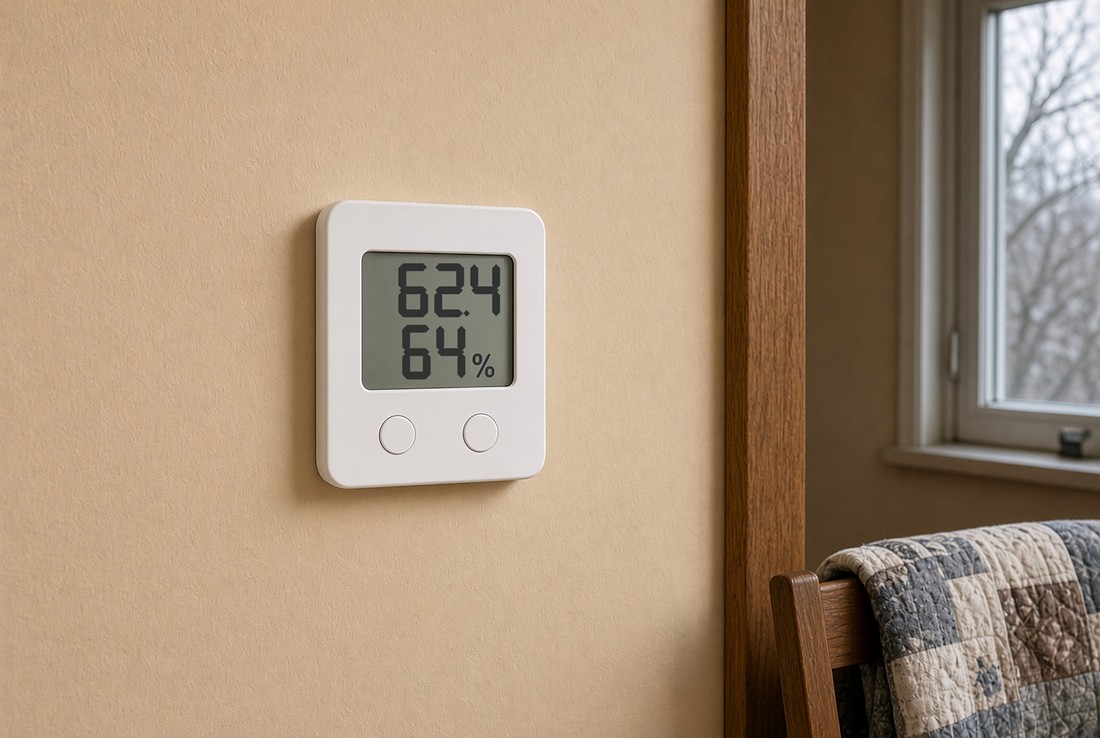
There is a second thermometer worth more than the first one, and it is the boring one: a plain room thermometer, on the wall of the room everybody is in. Ten dollars, and it turns “it feels cold in here” into a number you can act on before anybody’s body temperature is in question at all. That is the measurement this whole page is really about.
Buy the kind that shows humidity as well — a combined thermometer and hygrometer costs the same as a plain one and tells you two things instead of one. The second number matters more than people expect in a house that has been shut down for the winter: damp air feels colder at the same temperature, and rising humidity in a sealed room is the early warning for the condensation and mould described further up this page. Get one with large digits, because a gauge you have to hunt for your glasses to read is a gauge nobody checks. Room thermometers with humidity on Amazon →
The one in the medicine drawer — see home medical monitors for the rest of that drawer — is for afterwards.
The body is the furnace, and it runs on food
Everything above this is insulation — blankets, hats, foam, something under you. Insulation does not make heat. It only slows heat leaving. In a cold house with the power off, there is exactly one heater still working, and it is the person sitting in the chair.
And that heater needs fuel, which is the part almost nobody plans for.
The way a body makes heat when it gets cold is by shivering, and shivering is work — muscles contracting over and over, burning fuel and throwing off heat as the by-product. Researchers grade it by how far it lifts the metabolic rate above resting: mild shivering runs about one to two times resting, moderate two to three times, and hard shivering above three. In one cold-immersion study the measured rate reached three and a half times resting.
So a person shivering in a cold room is burning fuel at two or three times the rate they would be sitting in a warm one — doing nothing, in a chair, under a blanket.
Now the part that turns this from an interesting fact into something worth acting on. Shivering burns carbohydrate first and hardest. As it intensifies, muscle glycogen becomes the dominant fuel — and the body's carbohydrate store is small compared with its fat. Researchers have measured muscle glycogen falling measurably over a single cold exposure.
And here is the finding that matters: when those carbohydrate reserves run down, heat production during shivering is impaired. Not appetite, not comfort — heat production. A body that has run out of fuel makes less warmth, in the situation where warmth is the entire problem. Food in a cold house is not morale. It is the fuel supply of the last heater you own.
Which makes the rules simple
Two honest qualifications, because this should not be overstated.
A body is not helpless the moment it misses a meal. One study found that mild shivering could be sustained for a full day even on a considerable energy deficit. Nobody should panic about a skipped lunch. The argument is about days rather than hours, and about the household member with the least reserve to spend — which on this site is usually the oldest person in the room, and sometimes the youngest.
And the obvious one: if anybody in the house manages diabetes or follows a restricted diet, none of that pauses because the power did. A cold house changes what a body is burning, and that is a conversation for their own doctor or nurse in October rather than a website in February. Ask the question while it is easy to ask.
It also puts a different weight on the food side of the go-bag list. Those tins and packets are not only there so nobody goes hungry for three days. In a cold house they are the fuel for the only heat source that has not failed.
The whole of this, priced honestly: a box of second-hand wool blankets, a knitted hat for every head, one properly rated sleeping bag per person bought on the comfort number, a handful of foil blankets, something to put under people, a bag of hand warmers — and food in the cupboard that needs no cooking. Bought over a few months from thrift shops and end-of-season sales, that is a modest amount of money for the thing that carried people through the week this page is about. And unlike a generator, none of it can fail to start.
💰 Why This Is a Fifty-Year-Old's Errand
Nothing on this page gets easier to arrange later.
A wood stove at fifty is a decision made on a fine afternoon with three quotes on the table and a whole summer to get the chimney done. A wood stove at seventy-two is a decision made in the second week of January by somebody who is already cold, and it will cost more and be done in more of a hurry by whoever can come.
The same goes for all of it. The quilt, the towel, the alarms, the question of which room and whether the fireplace works without power — every one of those is a twenty-minute job in September and an emergency in February. And the people who freeze in their own houses are hardly ever people who made a bad decision. They are people who made no decision, because the moment for making one arrived at the same time as everything else.
Cold is not a dramatic way to be in trouble. That is exactly what makes it dangerous. Nothing bangs. Nothing catches fire. Somebody simply gets a little confused, and a little sleepy, and decides they are fine where they are.
Before You Close This Page
Walk the house and name the room.
Which one would you all live in for four days? Smallest, most interior, fewest windows, and one you could stand. Then ask the one question about it: is there anything in this house that makes heat with the power off?
It takes ten minutes, it costs nothing, and it turns a bad night into a plan you already had. Nobody has to buy a thing tonight.
This page is general safety information about heating equipment, not medical advice and not a substitute for your local building and fire code, which differs from place to place and which your building department or fire marshal will tell you over the telephone. If you think anyone has been exposed to carbon monoxide, get them into fresh air and call 911.