🏠 The Hole in the Wall
Plainly, first. This page is for educational purposes only. BuyItAt50 is not a builder, an energy auditor, a fire marshal or a manufacturer, and it has no connection to any company making insulation, film kits, shades or windows. It describes published figures and ordinary practice in plain words. Building and fire codes vary by state, county and town. Check anything permanent with your own building department, and anything about escape routes with your own fire department.
Stand in any room in your house in January and put your hand flat on an outside wall. Then put it on the glass. That difference is the whole of this page.
A framed and insulated wall is somewhere around R-13 to R-30, depending on when the house was built. A single pane of glass is about R-1. A standard double-glazed unit is about R-2. So in the middle of a wall doing its job, there is a rectangle doing between a thirteenth and a thirtieth of it — and in most houses there are a dozen or more of them.
That last figure is the Department of Energy's, and it is the number worth carrying: heat lost and gained through windows accounts for something like a quarter to a third of what a house spends on heating and cooling. Not a rounding error. A quarter of the bill, leaving through the part of the wall you can see through.
And it is losing heat three different ways at once, which matters because the fixes address different ones.
Three separate leaks, one opening
Everything below is aimed at one or more of those three. And the order to do them in is not the order people usually do them in.
🍿 What a Film Kit Actually Is
The boxes are in every hardware store from October, and a lot of people buy one without ever being told what is in it or what it does.
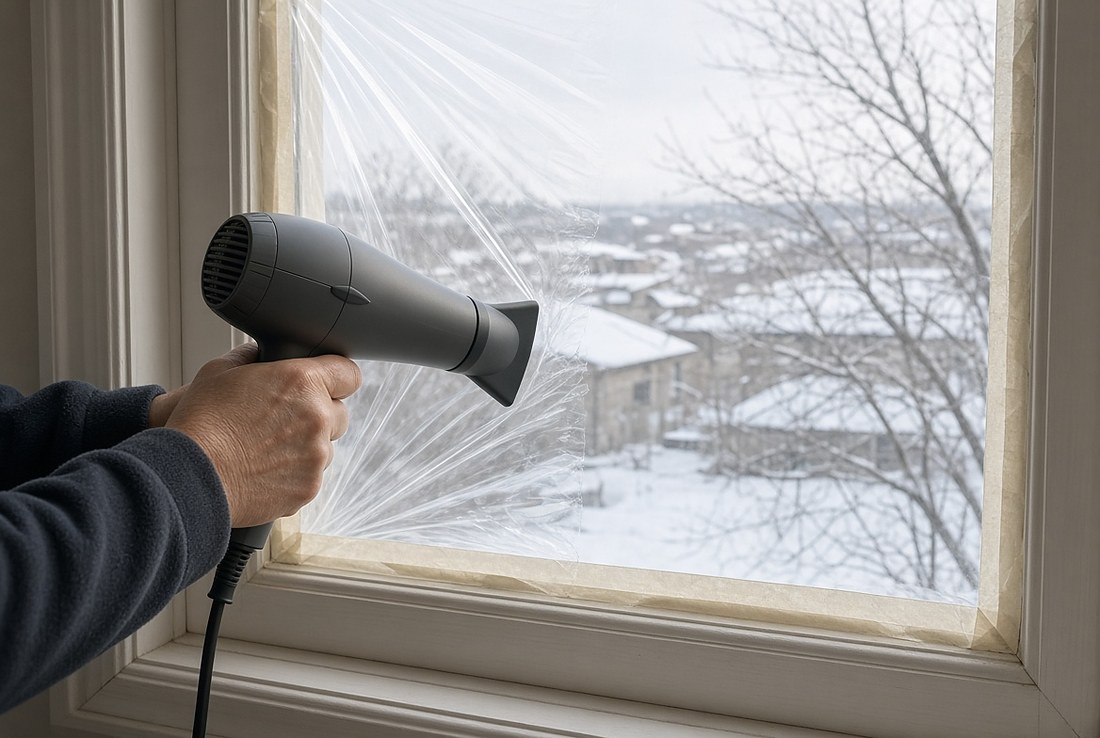
It is a roll of clear plastic sheet and a roll of double-sided tape. That is the entire product. You clean the window trim, run the tape around it, stretch the sheet across the whole opening and press it on, then go over the plastic with a hair dryer, which shrinks it drum-tight and takes the wrinkles out. The result is a sealed transparent membrane a few inches in front of the glass.
Here is what it is doing, because it is widely misunderstood. The plastic is not insulation. It is a few thousandths of an inch thick and its own R-value is essentially nothing. What it gives you is two other things:
What you are actually buying
So the honest verdict. On an old single-glazed window that rattles in the wind, a film kit is genuinely worth the money and the hour. On a tight modern double-glazed unit it does very little, because both of the things it provides are already there.
Its real drawbacks are not about performance. It is a one-season product — the sheet gets thrown away in spring and the tape frequently takes a strip of paint with it. The window cannot be opened all winter, which matters more than people expect in a house that needs airing. And it never looks like anything but plastic over a window.
🧩 The Board That Goes in the Opening
Now the method this page is really about, because it is better than the film by a distance and almost nobody is selling it to you.
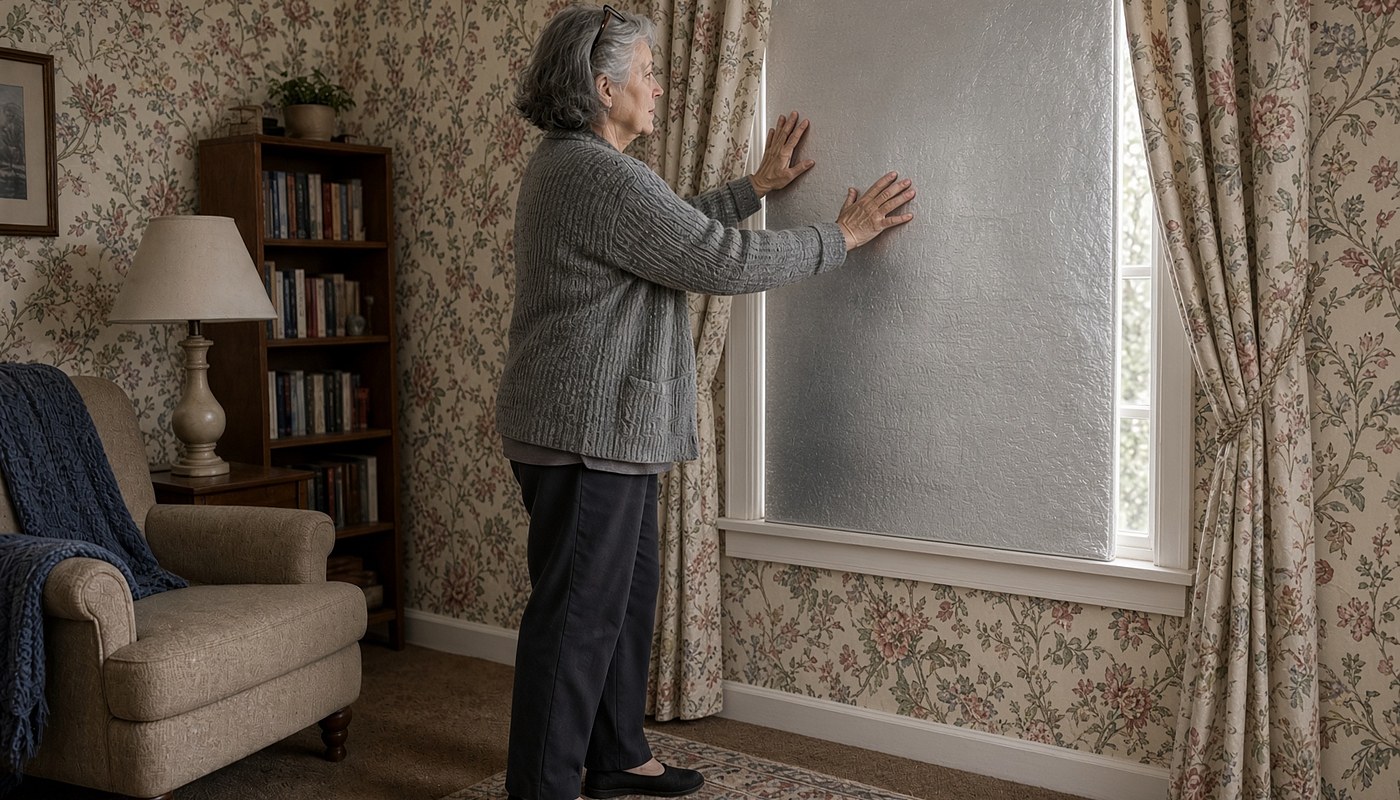
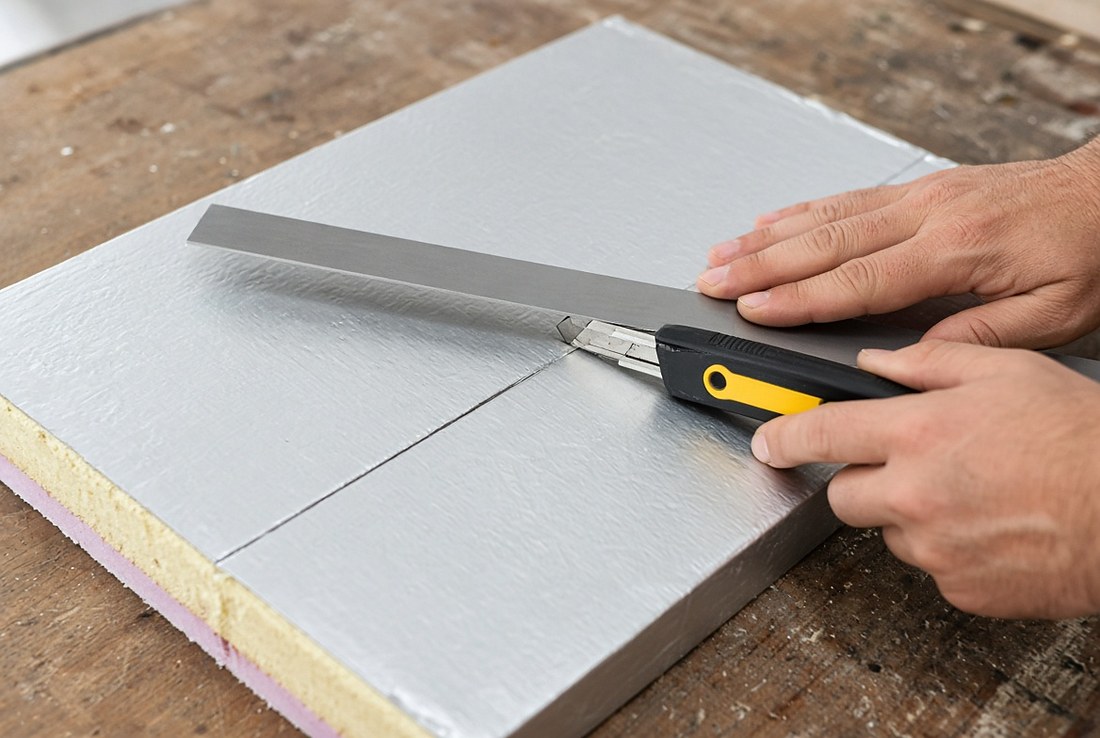
You buy a sheet of rigid foam insulation board — the faced polyisocyanurate kind, foil on both sides, half an inch thick, sold in four-foot by eight-foot sheets in the insulation aisle of any lumber yard. You cut a panel to fit each window opening exactly, and in winter you push it into the opening where it stays by friction alone. In spring you pull them out and stack them in the garage.
Half-inch polyiso is about R-3.2. You have just taken a hole rated at about R-1 and turned it into something better insulated than it was by several times — plus a sealed pocket of still air behind it, which the film kit sells you on its own.
An inch-thick sheet is about R-6 if you want more and have the depth in the reveal to take it.
And the reason it beats everything else on cost is that it is bought once. One four-by-eight sheet covers roughly two average windows. After the afternoon you spend cutting them, the panels cost nothing ever again — no tape every autumn, no plastic in the bin every spring, no batteries, nothing to wear out. They will outlast the person who cut them, which on this site is generally the test.
There is one honest trade and it is not small: you cannot see out, and the room goes dark. That is the entire case against it, and it decides which windows get a board and which get something else. More on that at the bottom of this page.
📏 How to Do It
This is an afternoon's work for a whole house, done once, on a table or a pair of sawhorses in the garage.
What you need
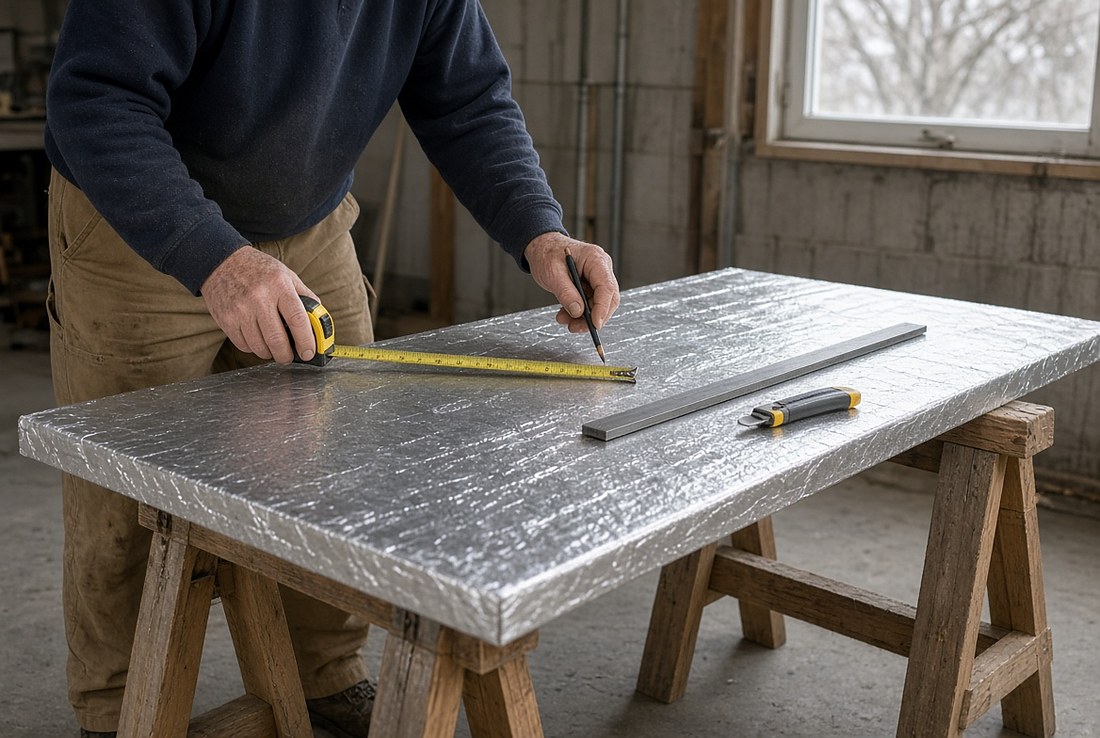
The method, step by step
One refinement worth the extra ten minutes. Run a strip of self-adhesive foam weatherstrip around the edge of the panel rather than relying on the foam itself to seal. It makes a slightly loose panel grip properly, it takes up the out-of-square, and it lets you pull the panel out without scraping the paint off the reveal.
And if a window is in constant use, a panel can be cut for the bottom sash only. Half the glass covered is half the loss stopped, and you keep the daylight and the view out of the top.
⚠️ Four Things to Get Right
None of these stop the method being a good one. All of them are worth knowing before you cut anything.
1. It is a plastic, and plastics burn
Rigid foam insulation is a foam plastic. It burns, and it produces heavy black smoke when it does. That is why the building codes require foam plastic that is permanently installed in a house to be covered by a thermal barrier — normally half-inch gypsum board — before anyone lives behind it.
A removable panel you push into a window in November and take out in March is a different thing from insulation built into a wall, and it is not what that rule is written about. But the material behaves the same way regardless of what the rule calls it, so:
Keep it well away from anything that makes heat. No panel in a window behind a heater, near a wood stove or fireplace, above a radiator, beside a candle or an oil lamp, or where a bulb touches it. The foil facing is not fire protection — it is a radiant surface, and it will not stop the foam behind it lighting. And do not turn a seasonal panel into a permanent fixture by screwing or gluing it in; the whole point of the method is that it comes out.
2. Never block an escape window
This is the one that could cost somebody their life, and it takes one minute of thought to get right.
Bedrooms are required to have a window big enough to climb out of in a fire — an emergency escape and rescue opening, in the code's language — and in a good many houses there is exactly one per bedroom. A friction-fit board over it in the dark, in smoke, by somebody who has just woken up, is a barrier at the worst possible moment.
So: work out which window in each bedroom is the escape route, and do not board that one. Board the other one, or fit a panel to the bottom sash only, or use one of the see-through options below. If there is only one window in the room, it does not get a panel. Your own fire department will tell you what counts where you live, and they would far rather have that conversation in October.
3. Condensation behind the board
A sealed panel makes the glass behind it colder than it was, because you have stopped room heat reaching it. Cold glass plus damp household air equals water, and if enough of it runs down onto a wooden sill and sits there all winter you get mould and eventually rot.
It is easily managed and it wants doing deliberately: pull a couple of panels out every few weeks and look. A little misting is normal. Standing water on the sill, black spotting on the frame, or a swollen sill means that window needs more air — take the panel out of that one, or leave a deliberate gap at the top. Rooms that make a lot of moisture — kitchens, bathrooms, and any room where laundry gets dried — are the ones to watch.
4. The room goes dark, and that is not nothing

It is easy to treat daylight as a luxury when you are looking at a heating bill. It is not one, and this site is written for people for whom it matters more than average: light helps you see the edge of a step and the thing on the floor, and winter daylight is doing something for mood at the time of year when that is hardest.
So do not board the room you sit in all day. Board the spare room, the room nobody uses, the north-facing bedroom that has never been warm, the basement windows, a window behind a wardrobe. Use something you can see through on the room where you live. That is the trade, made deliberately, window by window.
☀️ The Other Half of the Year
Here is what makes the board a better buy than anything else on this page, and it is the part most people never think of: the same panels work in July, and they work by a completely different mechanism.
In winter you are stopping heat leaving by conduction. In summer the enemy is sunlight coming through the glass and turning into heat the moment it lands on your floor and furniture. Turn the panel round so the foil faces the glass and you are reflecting a good deal of that sunlight back out before it ever becomes heat in the room. That is the same principle as the reflective screen people put inside a car windscreen, applied to a house.
Where it pays is specific, and it is worth being deliberate rather than boarding everything:
The summer windows that matter
Which means the panels earn their keep twice a year rather than once, and the same afternoon of cutting covers both. That is a rare thing on any list of home improvements.
👁️ The Third Thing It Does — They Cannot See In
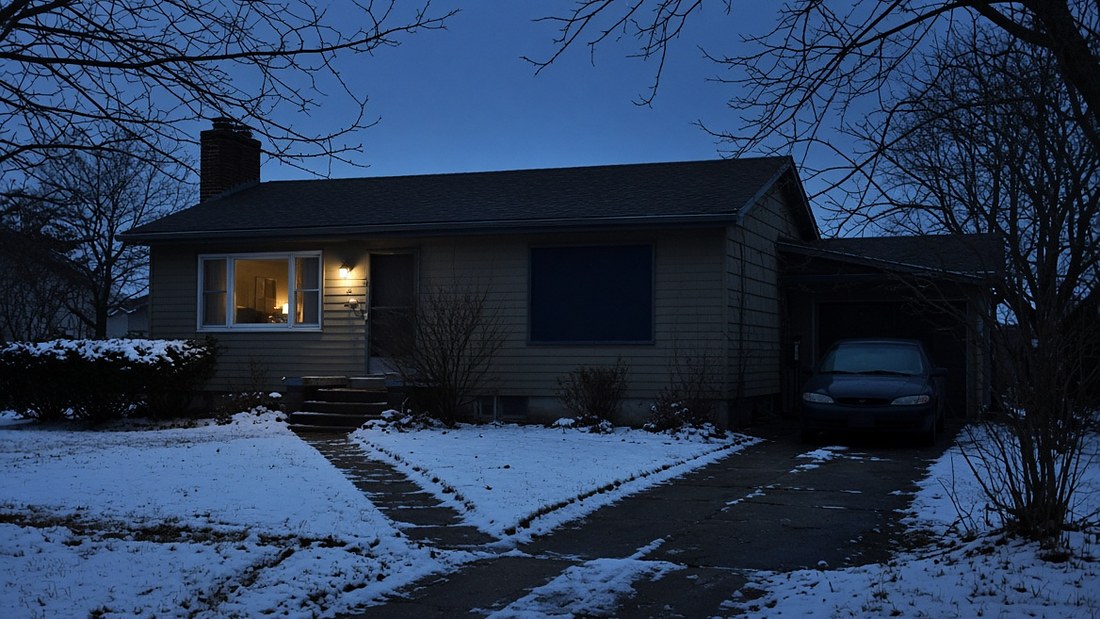
This came from a family who had been doing it for years, and it had nothing to do with the heating bill. A boarded window cannot be looked through. Somebody walking past a house, or standing in the yard at dusk having a good look, gets a dark rectangle and nothing else.
It sounds like a small thing until you look at what the research says burglars actually do, and then it stops sounding small.
The most useful study on this is the University of North Carolina at Charlotte survey of 422 convicted burglars in North Carolina, Kentucky and Ohio, which simply asked them how they chose houses and what put them off. The prime deterrent they named was the presence of people — near the house or inside it. Most of them go to real trouble to avoid meeting anybody, and the reasons they give are not moral ones: they are afraid of being hurt, of being caught, and of the much heavier sentence that comes with a confrontation.
Which means the question they have to answer before they do anything is: is somebody in there? And the window is how they answer it without knocking.
And there is a companion to that worth knowing, because it is the same question asked through a different hole: a cheap device exists that lets somebody outside look in through an ordinary front-door peephole. The fix is a piece of tape or a two-dollar cover, and it is set out on the home and property security page.
They do knock, of course — ringing the doorbell and waiting is one of the standard methods. But a window tells them a great deal more than a doorbell does, and it tells them without anyone knowing they asked. Whether a light is on and nobody is moving. Whether there is one cup on the table. Whether there is a walker beside the chair, or a stick by the door, or the television playing to an empty room. Whether the person in there is on their own.
A panel in the opening takes all of that away at once. There is nothing to read. No layout, no routine, no headcount, no walking aid, no idea whether the room beyond is empty or has four people in it.
And sound goes straight through it
Here is the part that makes it better than a curtain or a blind, and it is the family's own observation. Half an inch of foam stops heat and light. It does very little to sound.
So a radio playing in the kitchen, a television, somebody on the telephone, two people talking — all of that still reaches the yard. From outside, the house plainly has somebody in it, and there is no way to check who or how many. The one channel that would settle it has been closed, and the one that suggests an occupied house is still open.
That is a genuinely good trick, and it costs nothing extra, because the panel is already in the window for the heat.
The dog, which the research backs outright
The study puts it in almost exactly these words: alarms and dogs act as substitutes for occupancy. They do the job that a person in the house does, which is to make the place feel like somewhere you will be met.
And a dog is at its best in precisely this situation. It hears somebody at the window long before you do, and it does not need to see them either. A person standing at a boarded window, unable to see in, with a dog going off on the other side of it, has learned two things at once: there is something in there, and he cannot find out what. That is the whole calculation, and it is the point at which an easier house two streets over becomes the sensible option.
We have a page on that, written straight, with the injury figures put properly rather than scarily: a dog after 50.
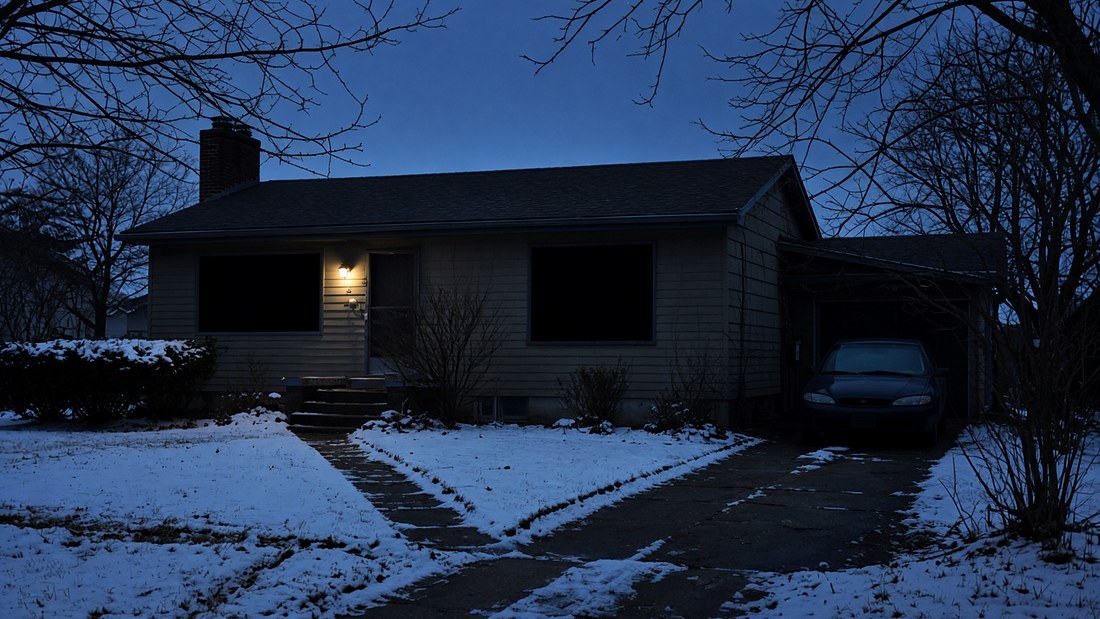
Two honest limits, because this is a side benefit and not a security system. First, a panel does not lock anything — it is half an inch of foam sitting in a reveal and it will not slow anybody down for a second. The things that actually cost a burglar time are on the home and property security page: the deadbolt, the strike plate, the sliding door, the lighting. Second, the effect depends on the rest of the house looking lived-in. A boarded window on a house with a car in the drive, lights on and the mail collected reads as a shuttered room. Every window boarded on a house with the mail piling up reads as an empty house — which is the opposite of what you want. If you go away, the panels are not a substitute for somebody collecting the post.
And a word on the everyday version of this, which has nothing to do with crime. A ground-floor bedroom on a street, a bathroom window facing a neighbour's kitchen, a front room where people walk past three feet from the glass — a lot of older people quietly keep the curtains shut all winter in rooms like that, and lose the daylight anyway. If the curtains are closed regardless, a panel behind them costs you nothing you had not already given up, and pays you back in heat.
Worth knowing about the source: that burglary study was funded by the research foundation of the electronic security industry — people who sell alarms. The findings about occupancy and about dogs match older independent research, and we have said who paid for it so you can weigh it yourself.
🚪 The Door, and the Towel Your Grandmother Used
A door is a window you walk through. Same three leaks — straight through the material, around the edges, and the cold-air current down the face of it — except a door has one opening no window has, which is the gap along the bottom that the whole thing has to swing over.
That gap is usually the single biggest hole in the door, and it is where the oldest fix in the book comes in.
Take a bath towel. Roll it up tight. Lay it along the floor against the bottom of the door. That is the whole of it, it costs nothing, and it works tonight.
Grandmothers have been doing that for a century and it is still right. The shops now sell a tidy version of the same idea — a fabric tube filled with something heavy, sold as a draught stopper or a door snake, in patterns and colours — and the better ones are double: two tubes joined by a flat strip that slides under the door, so the thing straddles the gap and moves with the door instead of being kicked across the floor every time somebody opens it. That is the one genuine improvement on the towel, and it costs a few dollars.
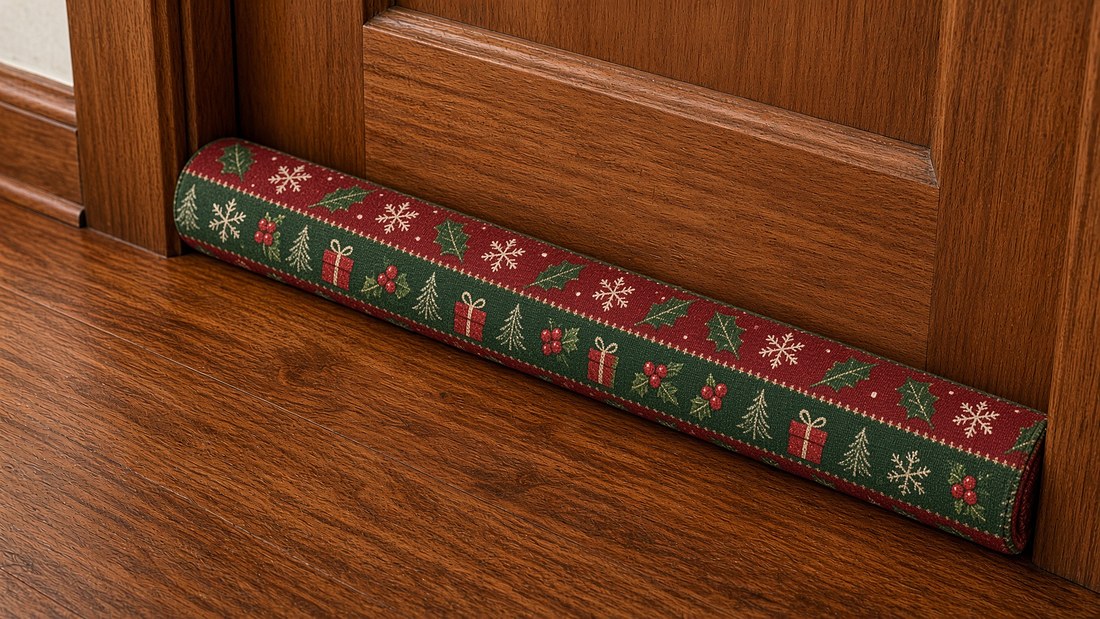
Either way it belongs against every door you are not using: the front door on a windy night, and above all the doors of the rooms you have shut off, which is the whole one-warm-room plan on the heating page made airtight at the bottom.
But be honest about what it is. A towel is a chore. It has to be put down, kicked aside, and put down again, every day, by somebody who has to bend to the floor to do it — and that is exactly the kind of small repeated bending that quietly stops happening. It is the right answer tonight. It is not the right answer for the next fifteen winters.
So test the seals, which takes five minutes
Weatherstripping is the strip of foam, felt, vinyl or rubber running round the frame that the door squashes against when it shuts. It perishes. It goes hard, it flattens, it tears at the corners, and on a lot of houses it has not been touched since the door was hung.
There are three tests, all free, and the Department of Energy's own building laboratory and the state extension services all give the same ones.
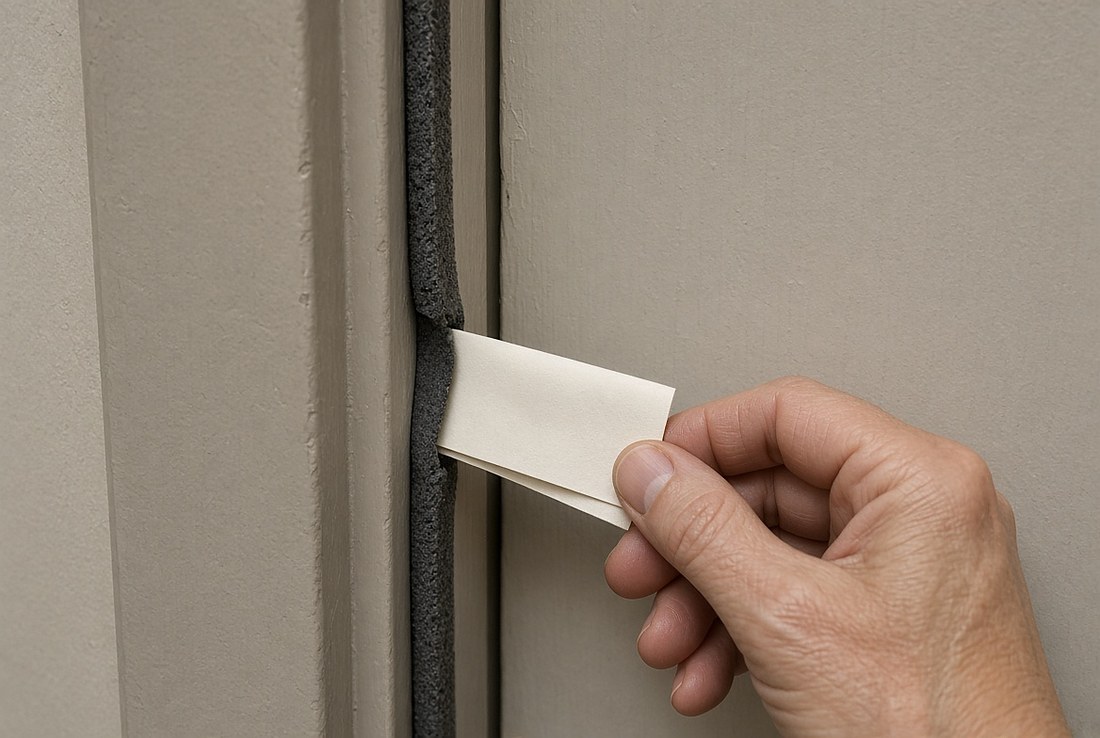
Three ways to find out
And then replace it, which is genuinely not difficult
This is a job people pay for and should not. It is a tape measure, a utility knife and a screwdriver, and the materials come off a rack at any hardware store for a few dollars a door.
What to buy and how to fit it
One honest note on the savings, because the numbers get thrown around loosely. Different sources quote different figures for what sealing a house saves, and they disagree enough that we will not print one. What is not in dispute is the Department of Energy's position that caulking and weatherstripping are among the fastest-paying improvements there are — the materials commonly recover their cost inside a year — and that air leaking through gaps is a large share of what a house spends on heating and cooling.
Which puts this first on the whole page, ahead of the foam board and everything else. It is the cheapest item, it is permanent, it is invisible, it works in every room in both seasons, and nothing has to be put up in October or taken down in April. Do the doors and the window frames first. Then do the clever things.
🛠️ Everything Else, Honestly Ranked
Somebody asked whether there is anything better than the cut-to-fit board. The honest answer is: not on insulation per dollar. What beats it is anything you can still see through — and those all cost considerably more. Here is the whole field, cheapest first.
Cheapest and most effective first
The arrangement that actually makes sense in most houses is not one method. Caulk and weatherstrip everywhere, because it is cheap and permanent. Board in the rooms nobody looks out of. Cellular shades or an interior storm panel in the room you sit in. And the film kit on whichever old window is worst, if you have one.
❓ Questions People Ask
What is the cheapest way to insulate a window for winter?
Sealing the air leaks around it, which costs almost nothing and is permanent. After that, the cheapest thing that adds real insulation is a panel of rigid foam board cut to fit the window opening. A sheet of half-inch polyisocyanurate is about R-3.2 and covers roughly two average windows, against glass that is about R-1 single or R-2 double. A shrink-film kit costs less per window but adds very little insulation; what it does well is stop draughts.
Do window shrink film kits actually work?
They work at what they are, which is a draught seal and a trapped layer of still air, not a layer of insulation. The plastic itself is a few thousandths of an inch thick and has essentially no R-value on its own. The gain comes from the dead air space it creates and from stopping air movement around a leaky sash. On an old single-glazed window that rattles, that is a noticeable improvement. On a reasonably tight double-glazed window it is much less.
What R-value does foam board add to a window?
Half-inch polyisocyanurate board is rated about R-3.2, and one-inch is about R-6. Fitted snugly into the opening it also traps a sealed pocket of still air between the board and the glass, which is worth something further. Put against single glazing at roughly R-1, that is several times the resistance you started with.
Is it safe to put foam insulation board over a window?
For a removable panel taken out at the end of the season, the practical cautions are these. Rigid foam is a plastic that burns and makes heavy smoke, so it must never be left near a heater, a stove, a candle or a lamp, and it is not something to fix permanently in a living space. Never block a bedroom window that is the room's emergency escape route. And check behind the board occasionally for condensation on the glass. Building codes require permanently installed foam plastic to be covered by a thermal barrier such as gypsum board, which is a good indication of how it should be treated.
Can you use window insulation in summer?
Yes, and that is the part most people miss. The same board turned foil side out reflects sunlight before it becomes heat in the room. The Department of Energy attributes a quarter to a third of residential heating and cooling energy to windows, and in summer the biggest part of that is sunlight coming straight through the glass. West-facing windows in the afternoon are where it pays most.
Does covering a window with foam board help with privacy or security?
It removes the one way somebody outside can check whether you are home and who is with you. In the University of North Carolina at Charlotte survey of 422 convicted burglars, the prime deterrent named was the presence of people, and burglars go to real trouble to work out whether anyone is in. A panel gives them nothing to read, while sound from a radio, a television or a conversation still passes through it, so the house reads as occupied and cannot be checked. It is a side benefit rather than a security measure, though: foam board locks nothing.
How do you stop a draught coming under a door?
Tonight, a rolled-up bath towel laid along the floor against the bottom of the door, which costs nothing and works. The shop version is a fabric tube, and the better ones are two tubes joined by a strip that slides under the door so it moves with the door instead of being kicked aside. Permanently, fit a door sweep to the bottom of the door and check whether your threshold has adjusting screws under plastic caps, because raising it can close the gap on its own.
💰 Why This One Is Bought Once
Almost everything that saves money on heating is a bill. A better furnace is a bill. A heat pump is a bill. A space heater is a bill every month for as long as you own it, and the cheapest heat on this site is still heat you are buying.
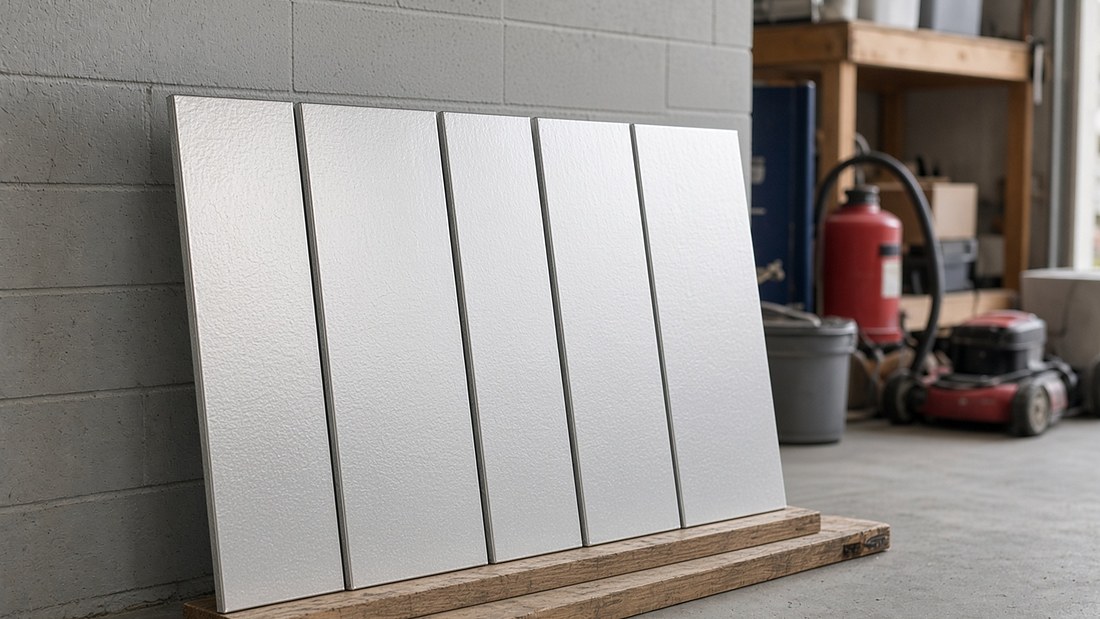
A stack of cut panels in the garage is the opposite. You pay for them once, on an afternoon when you are fit enough to measure and cut, and then they save you money every winter and every summer for the rest of your life without ever asking for anything.
That is the whole argument of this site in one sheet of foam board, and it is why this page exists rather than a page about replacing windows.
The timing argument is the familiar one and it is real. Cutting eight panels is a morning of measuring, kneeling at window reveals, carrying a full sheet in from the car and running a knife along a straightedge. It is not hard work. It is work that is much easier at sixty than it will be at eighty — and the panels do not care how old you are when you put them in each October. That job stays easy: lift, push, done.
Do it in the autumn, before the aisle empties and before the cold arrives. And if the reason you are reading this is that the heating bill has become genuinely frightening rather than merely annoying, do the free things first, and then read the page about help paying your utility bill — because two federal programmes exist for exactly that, one of them insulates houses for nothing, and older households are given priority by federal rule in both.
Sources: the figure that windows account for roughly 25 to 30 percent of residential heating and cooling energy use is from the U.S. Department of Energy, as are the comparative R-values for single and double glazing against insulated wall assemblies. R-values for rigid polyisocyanurate board are manufacturers' published ratings for the faced product. The thermal barrier requirement for permanently installed foam plastic is Section R316 of the International Residential Code, adopted in some form by most jurisdictions; the requirement for an emergency escape and rescue opening in sleeping rooms is Section R310 of the same code. Local adoption and amendment of both varies — check with your own building department and fire department. The dollar-bill, daylight and hand tests for door seals, and the weatherstripping types, follow guidance from the Department of Energy’s Building America Solution Center and from state cooperative extension services. The burglary findings are from “Understanding Decisions to Burglarize from the Offender’s Perspective”, a survey of 422 incarcerated burglars led by Joseph B. Kuhns at the University of North Carolina at Charlotte, funded by the Alarm Industry Research and Educational Foundation — the research arm of the electronic security industry, which is disclosed on the page.