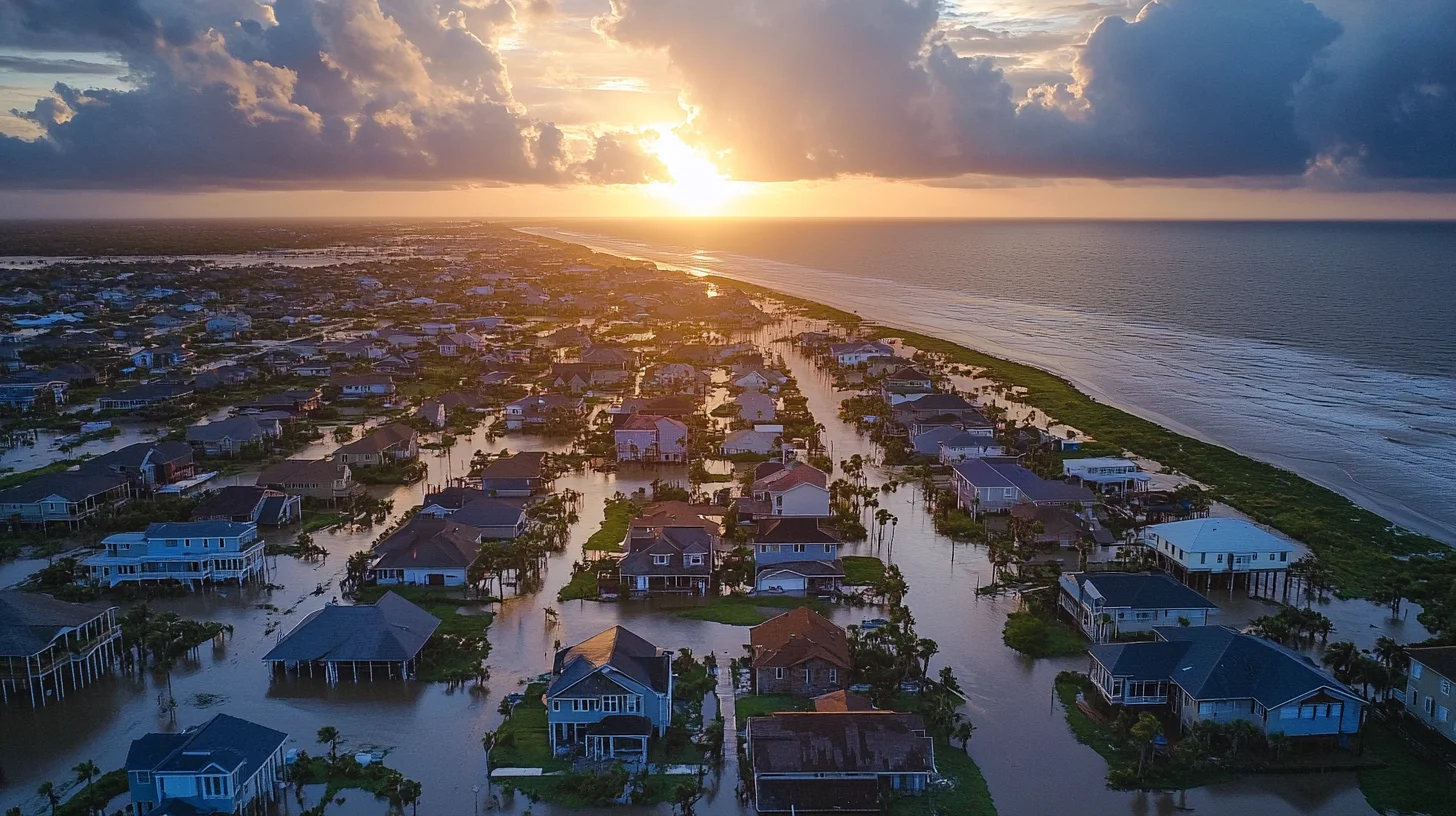
Miami-Dade is one of two HVHZ counties in Florida (with Broward). Every roofing material installed here must carry a Miami-Dade Notice of Acceptance (NOA) — a product approval stricter than the statewide Florida Product Approval. Hurricane Andrew's 1992 Category 5 landfall over Homestead is the reason these codes exist, and they remain the toughest residential wind standards in the nation.
Storm damage on Miami-Dade roofs
Miami-Dade roofs face the highest design wind speeds in Florida — and HVHZ rules mean repairs must restore full code compliance, not just stop the leak.
In the HVHZ, design wind speeds reach 175 mph in some coastal zones. Wind uplift breaks shingle and tile seals across whole sections at once, and salt air off Biscayne Bay accelerates fastener corrosion year-round. Because every repair must meet NOA standards, a licensed HVHZ-experienced roofer is essential — a non-compliant repair can void both your warranty and your windstorm coverage.
Tile roofs are common across Miami-Dade and require specialized inspection: a single cracked tile can let water reach the underlayment, and HVHZ re-roofing triggers secondary water barrier requirements that older homes may not have. A professional inspection identifies whether your roof meets current code or qualifies for upgrade.
🌀 Miami-Dade storm history
Hurricane Andrew (1992) devastated Homestead and south Miami-Dade as a Category 5 — the event that created the HVHZ code. Irma (2017) and the 2020–2024 seasons brought repeated wind and water damage across the county. Miami-Dade records some of Florida's highest annual storm-claim volumes.
2026 roof repair & replacement ranges
Ranges reflect 2026 quotes from licensed Miami-Dade HVHZ roofers. NOA-approved materials and enhanced installation push Miami-Dade above the Florida state average.
| Roof work | Typical range | Best for |
|---|---|---|
| Minor storm repair | $500 – $1,800 | A few damaged shingles or tiles, small leaks |
| Section / slope replacement | $2,000 – $7,000 | Localized wind damage, one slope |
| Full roof replacement | $11,000 – $32,000+ | Widespread damage, HVHZ tile or shingle re-roof |
HVHZ Notice of Acceptance materials and the required secondary water barrier add cost versus non-HVHZ counties — but they are mandatory for code compliance and windstorm insurance eligibility in Miami-Dade.
Your roofing product or service here. Reach homeowners actively comparing storm-damage roofing options across 13 coastal states. High-intent audience, zero waste.
Storm roof claims in Miami-Dade
Wind damage is covered under most Miami-Dade policies — but the county's separate hurricane deductible and HVHZ rules make documentation critical.
Most Miami-Dade policies carry a separate, higher hurricane deductible (often 2–5% of the home's insured value) for named storms. Adjusters require dated evidence tying damage to a specific event, and any repair must restore NOA-compliant materials. A professional inspection produces the photos, written assessment, and code notes your claim needs. Florida's 2023 insurance reforms also changed assignment-of-benefits rules — read your policy before signing anything with a contractor.
Work the numbers before the adjuster does. The coinsurance calculator and the hurricane deductible calculator between them explain most of the gap homeowners find between what a roof costs and what a policy pays.
What to do once it's safe
Stay safe & tarp if needed
Don't climb a damaged roof. Cover active leaks from inside and call a pro for emergency tarping. Step-by-step tarp guide →
Document everything with dates
Dated photos of all visible damage — roof, ceilings, walls, attic. Timestamps matter for claim correlation.
Hire a licensed roofer to inspect
A licensed Miami-Dade roofer finds hidden damage and writes the report your claim needs.
File within your window
Submit promptly with the inspection report. Earlier is always stronger.
How to verify a roofer in Miami-Dade
After any major storm, unlicensed contractors flood Miami-Dade neighborhoods. Protect yourself.
Miami-Dade roofing contractors must hold a Florida Certified or Registered Roofing license AND be familiar with Miami-Dade HVHZ permitting through the county's RER (Regulatory and Economic Resources) department. Verify any contractor at MyFloridaLicense.com and confirm they pull HVHZ permits. After major storms, unlicensed crews are common in Homestead and south county — always verify before signing.
Verify state license
Check the Florida licensing board before signing anything.
Confirm insurance
Ask for liability and workers' comp certificates.
Use a local roofer
Local pros know Miami-Dade-area permits and stay accountable.
Other Florida areas we cover
Not in Miami-Dade? Find licensed roofers in nearby communities.
How to hire a licensed Miami-Dade roofer
StormRoofQuotes is an independent, ad-supported information resource. We don't arrange inspections or refer you to any contractor — the guides below explain how to document damage and hire a licensed local roofer yourself.
StormRoofQuotes is an independent, ad-supported information resource. We publish storm-recovery guides and clearly-labeled roofing advertisements. We do not arrange inspections, take commissions, or refer you to any contractor.
How this site works →