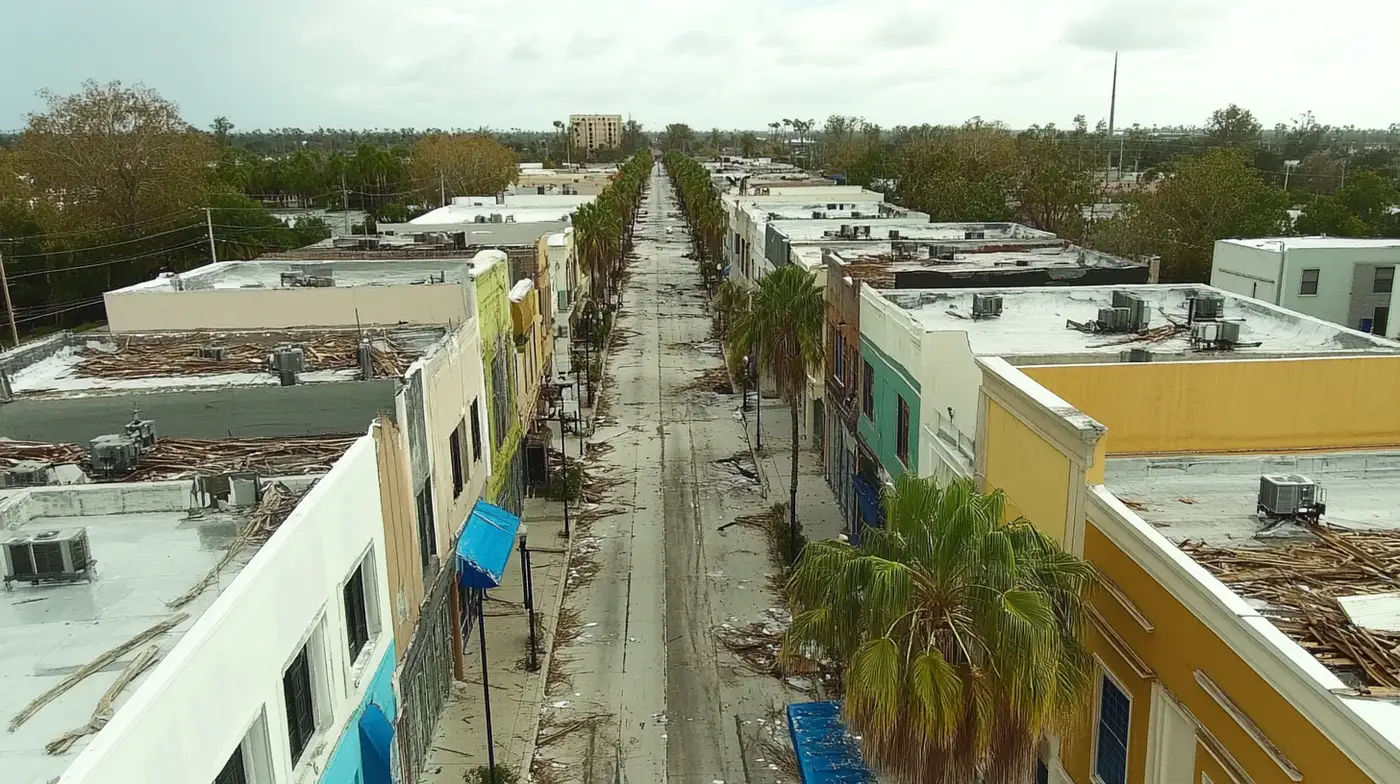
Why April preparation protects you from June storms
The Atlantic hurricane season officially runs June 1 through November 30. But Hurricane Beryl (July 2024) and the May 2024 Texas Derecho both demonstrated that catastrophic storm damage arrives on its own schedule. Commercial properties prepared by May are protected from day one of season. Those that wait until August are already behind.
The May 2024 Derecho in Houston caused billions in damage before peak season began. Beryl then followed in July — a Category 4 storm that caught many Gulf Coast commercial properties underprepared. The checklist below is structured around a single principle: complete your preparation before June 1, not after the first storm warning.
Roof and building envelope checklist
Schedule a professional roof inspection
Book your pre-season commercial roof inspection in April, before demand spikes. A licensed commercial roofer should inspect membrane seams and fasteners for lifting or degradation, flashing around skylights, HVAC units, pipes, and drains, and perimeter edge metal for wind uplift vulnerability. Get a written report with photos.
Clear all drainage systems
Clear every interior roof drain, scupper, gutter, and downspout before storm season. Debris from winter and spring accumulates in drainage systems. A blocked drain during a tropical storm causes ponding that can structurally overload a flat roof — typically 5 gallons of water per square foot of additional dead load.
Secure all rooftop equipment
HVAC units, satellite dishes, signage, and mechanical equipment on the roof are wind missiles during a hurricane. Verify all equipment mounting bolts are intact and properly torqued. Check that HVAC curb flashings are sealed. Remove or secure any loose materials stored on the roof.
Document current roof condition
Take dated, geotagged photos of the entire roof surface, all flashings, drain areas, and equipment. Store these in the cloud and email copies to yourself and your insurance contact. This establishes pre-storm baseline condition — the most valuable evidence in any storm damage claim.
Review and repair any known deficiencies
If your last inspection identified any deferred repairs, complete them before hurricane season. Small membrane patches, resealed flashings, and cleared drains that cost $500–$2,000 to fix now cost $15,000–$50,000 if storm water gets through them.
Insurance and documentation checklist
Pull your commercial property policy and read it
Find: your named-storm deductible (usually expressed as a percentage of insured value), whether you have business interruption coverage and what the waiting period is, the claims filing deadline after a storm, and whether your policy has a coinsurance clause.
Verify your insured value reflects current replacement costs
Commercial construction costs increased 25–40% since 2020. If your building is insured at 2021 values, you may be triggering a coinsurance penalty on any claim. Request a replacement cost appraisal if your insured value hasn't been updated recently.
Create an emergency contact binder
Keep a physical and digital binder with: insurance policy number and claims hotline, commercial roofing contractor emergency contact, property manager and building owner contacts, utility emergency contacts, and your pre-storm photo documentation. Share with all key stakeholders before storm season.
Pre-authorize your roofing contractor for emergency response
Waiting until after a storm to find a contractor means paying surge pricing and waiting in line. Pre-authorize a licensed commercial roofing contractor for emergency response before storm season. Confirm their emergency tarping and temporary repair capabilities and their typical response time after a named storm event.
✅ The pre-authorization advantage
Commercial property owners who have pre-authorized contractors in place before storm season consistently report faster response times, lower emergency rates, and better documentation of damage compared to owners who search for contractors post-storm. Your contractor knows your building — the inspection is faster and more thorough when they've been there before.
Tenant notification checklist
- Distribute emergency contact sheet to all tenants listing building owner, property manager, and emergency numbers
- Remind tenants of their insurance responsibilities — their business personal property and BI coverage is separate from the building policy
- Establish a communication protocol for storm updates — how you'll notify tenants of damage, repair timelines, and access restrictions after a storm
- Review lease casualty provisions — remind yourself which party has which obligations if the building is damaged or temporarily uninhabitable
Informational purposes only. The content on this page is general educational information about commercial roofing and property insurance — it is not legal advice, insurance advice, or a guarantee of any specific outcome. Insurance policies, lease terms, building codes, and contractor licensing requirements vary by state, carrier, and individual circumstances. Always consult a licensed insurance professional, attorney, or qualified contractor for advice specific to your situation. StormRoofQuotes is a roofing lead-generation service and is not a licensed insurer, attorney, or financial advisor.