Percentage deductibles vs. flat deductibles
Most commercial property owners know they have a deductible. Far fewer know whether it's a flat dollar amount or a percentage of insured value — and that distinction is enormous for coastal properties.
A $5,000 flat deductible is $5,000 no matter what your building is worth. A 3% wind deductible on a $1,500,000 building is $45,000. The same 3% on a $3,000,000 building is $90,000. In high-risk coastal zones, named-storm deductibles of 2–10% of insured value are common, according to Insureon's 2026 commercial property data.
2024/2025 market reality
U.S. roof repair and replacement costs hit nearly $31 billion in 2024 — a 30% increase since 2022, according to Verisk. Insurers have responded by raising deductibles, tightening documentation requirements, and in some coastal markets, requiring percentage-based wind deductibles even for inland commercial properties. The trend is not reversing.
Three deductibles on one policy
Many coastal commercial property policies have three separate deductibles that apply to different events:
- AOP (All Other Perils) deductible — flat dollar amount, applies to most covered losses (fire, theft, vandalism, non-wind water damage). Often $1,000–$10,000.
- Wind/Hail deductible — percentage of insured value, applies to any wind or hail damage from unnamed storms. Often 1–3% in coastal areas.
- Named Storm / Hurricane deductible — higher percentage, applies only when NHC officially names the storm. Often 2–5% in Gulf/Atlantic coastal states, up to 10% in extreme risk zones.
After Hurricane Ian (2022) and Beryl (2024), many Gulf Coast commercial properties discovered their named-storm deductible applied — not the smaller AOP deductible. Southeast and Gulf Coast states (Florida, Louisiana, Alabama) typically see hurricane deductibles of 2–5%, while Northeast coastal properties (NJ, NY) now commonly see 2% windstorm deductibles tied to nor'easters and named hurricanes.
State-specific rules for commercial wind deductibles
Each of our 13 covered states handles commercial wind deductibles differently:
- Florida — Named-storm deductibles of 2–5% common. Miami-Dade and Broward (HVHZ) properties may face higher deductibles due to elevated building code requirements. Citizens Commercial policies have specific deductible structures.
- Texas — Gulf Coast properties insured through TWIA (Texas Windstorm Insurance Association) have state-mandated deductible structures. TWIA commercial deductibles are 2% of insured value for named storms. Non-TWIA policies vary by carrier.
- Louisiana — Louisiana Revised Statutes §22:1267.1 (updated 2025) governs commercial named-storm deductibles. Percentage deductibles must be clearly disclosed. Louisiana Citizens provides coverage for properties unable to obtain voluntary market coverage.
- North Carolina, South Carolina, Virginia — Wind/hail deductibles of 1–3% typical for coastal properties. NC's beach area properties may be insured through NCJUA with specific deductible requirements.
- New Jersey, New York — Post-Sandy reforms changed coastal deductible structures. 2% windstorm deductibles now common in Shore and Long Island properties.
- Maryland, Delaware — Chesapeake Bay and Atlantic Coast properties typically see 1–2% wind deductibles.
Managing your deductible exposure
Four strategies to reduce the financial shock of a percentage deductible:
- Deductible buydown endorsement — a separate mini-policy that covers the gap between your deductible and zero. Premium is modest relative to the protection on a high-value commercial building.
- FORTIFIED roof certification — the Insurance Institute for Business & Home Safety (IBHS) FORTIFIED Commercial program. Some carriers offer premium discounts for FORTIFIED roofs. A 2024 state law in one southeastern state now requires insurers to offer actuarially justified premium discounts for FORTIFIED-certified properties.
- Agreed value endorsement — locks in your insured value, which defines your deductible calculation. Prevents post-storm disputes about what percentage applies to what value.
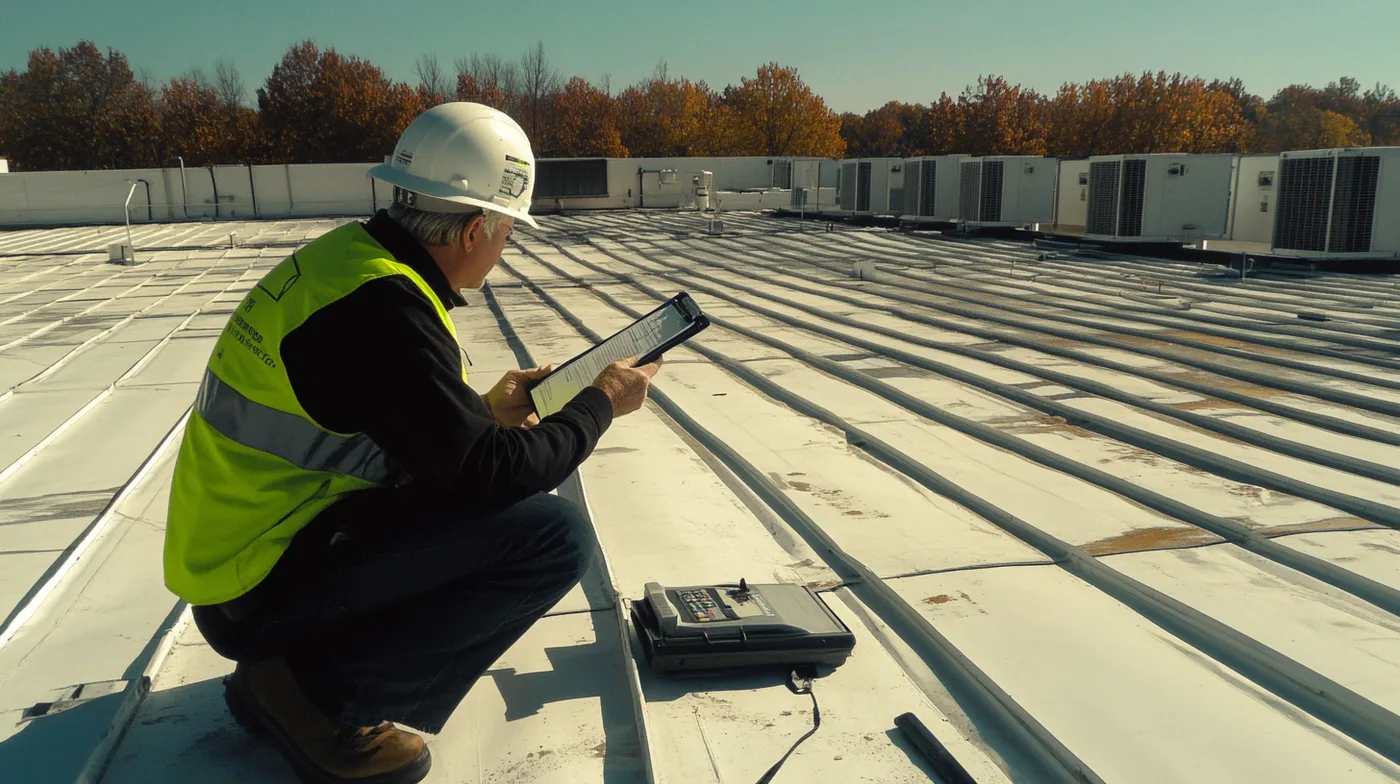
- Pre-storm documentation — dated inspection reports establishing pre-storm roof condition protect against insurers attributing damage to pre-existing wear and tear rather than the storm event.