Blanket vs. scheduled: how limits are assigned
Commercial property owners with multiple locations face a structural choice in how their coverage is organized:
Scheduled (specific) coverage assigns a fixed dollar limit to each building or location listed in the policy. The schedule might show: Building A (Gulf Coast retail): $1,200,000 / Building B (inland office): $800,000 / Building C (warehouse): $600,000. Total scheduled coverage: $2,600,000. If a hurricane causes $1,800,000 in damage to Building A, you can only collect $1,200,000 — Building A's scheduled limit — even though total policy coverage is $2,600,000.
Blanket coverage places all covered locations under a single aggregate limit. Using the same numbers, a $2,600,000 blanket limit means the full $2,600,000 is available for any single loss. If Building A suffers $1,800,000 in damage, you collect $1,800,000 — no location-specific cap applies.
Why blanket coverage matters after a major hurricane
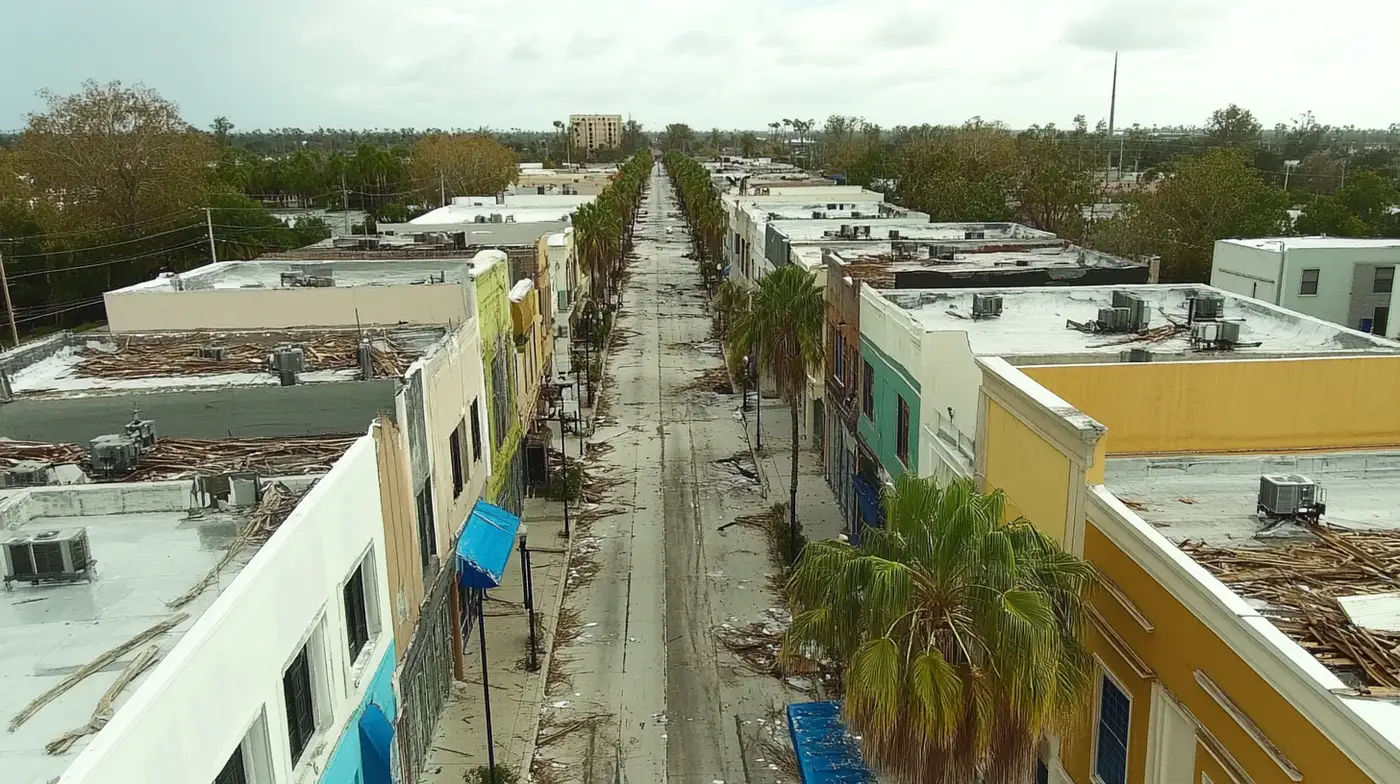
Hurricane events rarely cause proportional damage across all locations. A major storm hits specific corridors intensely — a direct eyewall passage can cause catastrophic damage to properties in a narrow band while locations 30 miles away suffer only minor damage. Under scheduled coverage, your most exposed location is capped at its individual scheduled limit regardless of actual loss severity. Under blanket coverage, your full aggregate limit is available where the damage is worst.
This concentration risk is particularly acute for:
- Coastal retail strips or shopping centers where multiple buildings are in the same storm track
- Multi-family or condo portfolios in coastal zones
- Commercial portfolios with flagship locations that have higher replacement costs than initially estimated
After Hurricane Beryl (2024), some multi-location Gulf Coast commercial property owners with scheduled policies discovered their heavily-damaged primary location was significantly under-scheduled relative to actual replacement costs — a combination of inflation-driven cost increases and initially conservative scheduling at policy inception.
Blanket coverage requirements and trade-offs
Blanket coverage typically comes with stricter requirements than scheduled coverage:
- Higher coinsurance requirements — most blanket policies require 90% coinsurance across the combined value of all locations. Failing to maintain this across the full portfolio triggers the coinsurance penalty on any claim.
- Statement of Values — insurers typically require a current Statement of Values (SOV) listing all properties and their replacement cost values. The SOV must be kept current as properties are acquired, sold, or improved.
- Annual appraisals — given construction cost inflation (25–40% increase over five years), insurers increasingly require current replacement cost appraisals to support blanket limits. Stale valuations create coinsurance exposure.
- Premium structure — blanket premiums are calculated on total aggregate values. If one location has significantly higher risk (coastal vs. inland), the blended rate may be higher than scheduling each location at its individual rate.