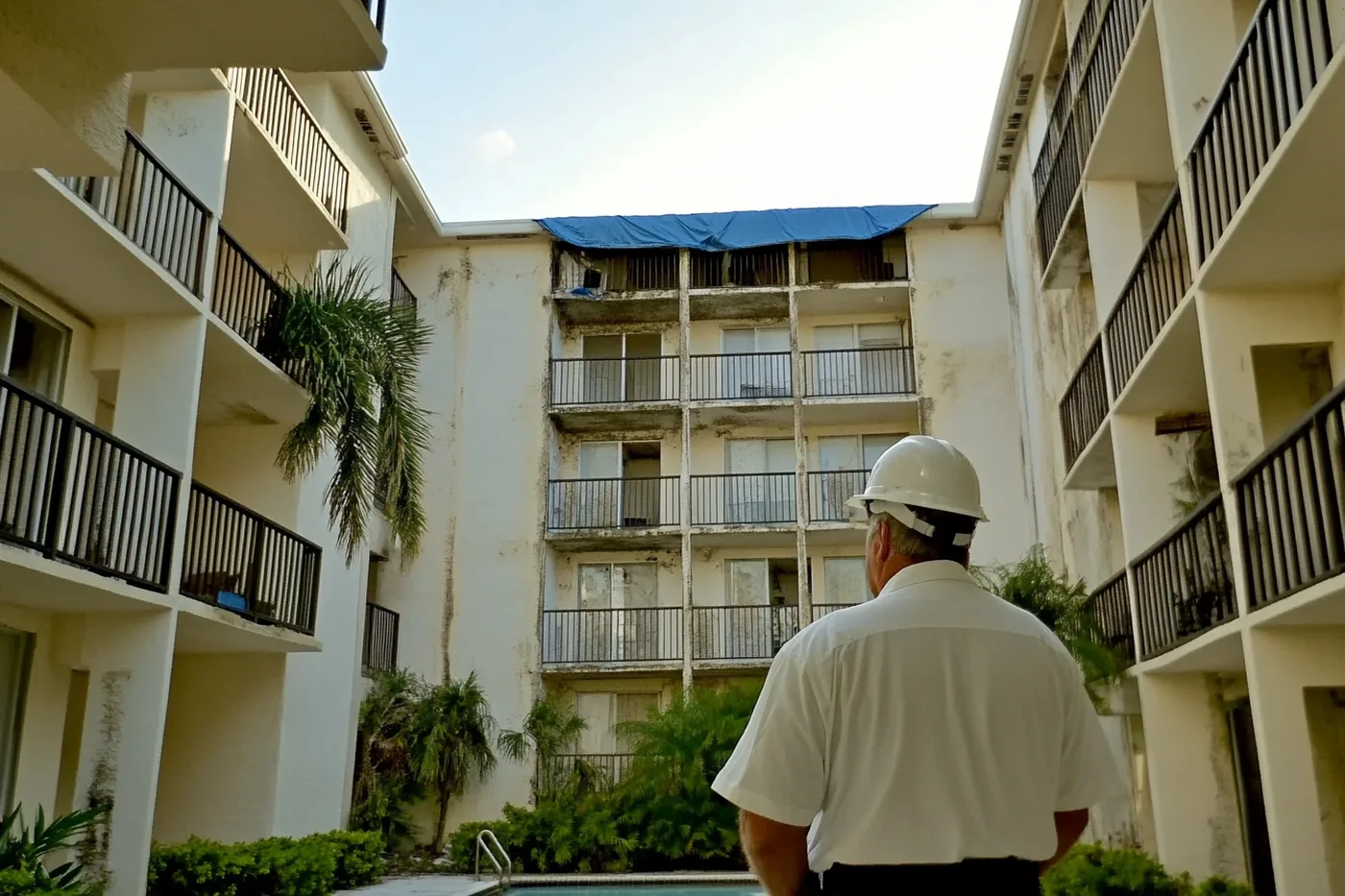
Bare walls, single entity, or all-in — which do you have?
The most important thing every condo and HOA unit owner in a coastal storm zone needs to know is their association's master policy type:
- Bare walls in (or naked walls) — the master policy covers the building structure, exterior, common areas, and shared systems up to the bare drywall or concrete of each unit. Everything inside the unit — flooring, cabinets, fixtures, appliances, interior walls — is the unit owner's responsibility under their individual HO-6 policy. Most common type in older associations and in states with less prescriptive condo insurance laws.
- Single entity (or original fixtures) — covers original building fixtures, flooring, and finishes as they existed when the condo was built. If you replaced the original flooring or upgraded the kitchen, your improvements are on your HO-6. The master covers what was there originally.
- All in (or all inclusive) — covers the structure plus all fixtures, finishes, and improvements within units, including upgrades made by unit owners. Individual HO-6 policies are primarily needed for personal property and liability, not interior finishes.
Request a copy of your association's master policy declarations page and confirm which type you have. This determines your HO-6 requirements.
After a hurricane hits a condo building
Following a direct hurricane impact, the claims process for a condo building involves multiple simultaneous tracks:
- Association master policy claim — the HOA or condo board (or their property manager) files for structural damage: roof, exterior walls, common area flooding, elevator damage, parking structure, pool equipment. The association's insurer sends an adjuster to evaluate common element damage. This claim is separate from individual unit claims.
- Individual unit owner claims — each unit owner files their own HO-6 claim for unit interior damage, personal property loss, and loss of use (temporary housing costs if the unit is uninhabitable). The association's settlement does not automatically cover your unit's interior.
- Special assessments — if the master policy proceeds are insufficient to cover all repairs (deductible shortfall, coinsurance penalty, excluded damage), the association may levy a special assessment against all unit owners. Your HO-6 policy may include loss assessment coverage — typically $1,000–$10,000 — to cover your share of a special assessment.
FORTIFIED Roof designations for multi-family
The IBHS FORTIFIED program has a multi-family designation. A 2024 NC study found FORTIFIED-certified properties had 35% fewer claims after major hurricanes and 23% less damage severity. Some coastal states now offer premium discounts for FORTIFIED multi-family buildings — and some require insurers to offer these discounts by law.
Special assessment risk — the liability every unit owner should plan for
One of the most financially damaging outcomes after a major hurricane for condo owners is an unexpected special assessment for the association's under-insured storm losses. This happens when:
- The master policy's named-storm deductible (often 2–5% of building value) creates a large out-of-pocket cost for the association
- The building was underinsured relative to current replacement costs
- Storm damage to common areas exceeds coverage limits
- The association's reserve fund was insufficient to absorb the deductible and coverage gaps
A 2% named-storm deductible on a $10M condo building is $200,000 — that's the association's first-dollar exposure before insurance pays anything. If reserve funds are depleted, that $200,000 is divided among unit owners as a special assessment. Each unit owner's share could be $5,000–$20,000+ depending on unit count and assessment methodology.
Request your association's reserve fund study and current reserve balance annually. Verify their master policy's named-storm deductible. Ensure your HO-6 includes loss assessment coverage — and understand its limit.