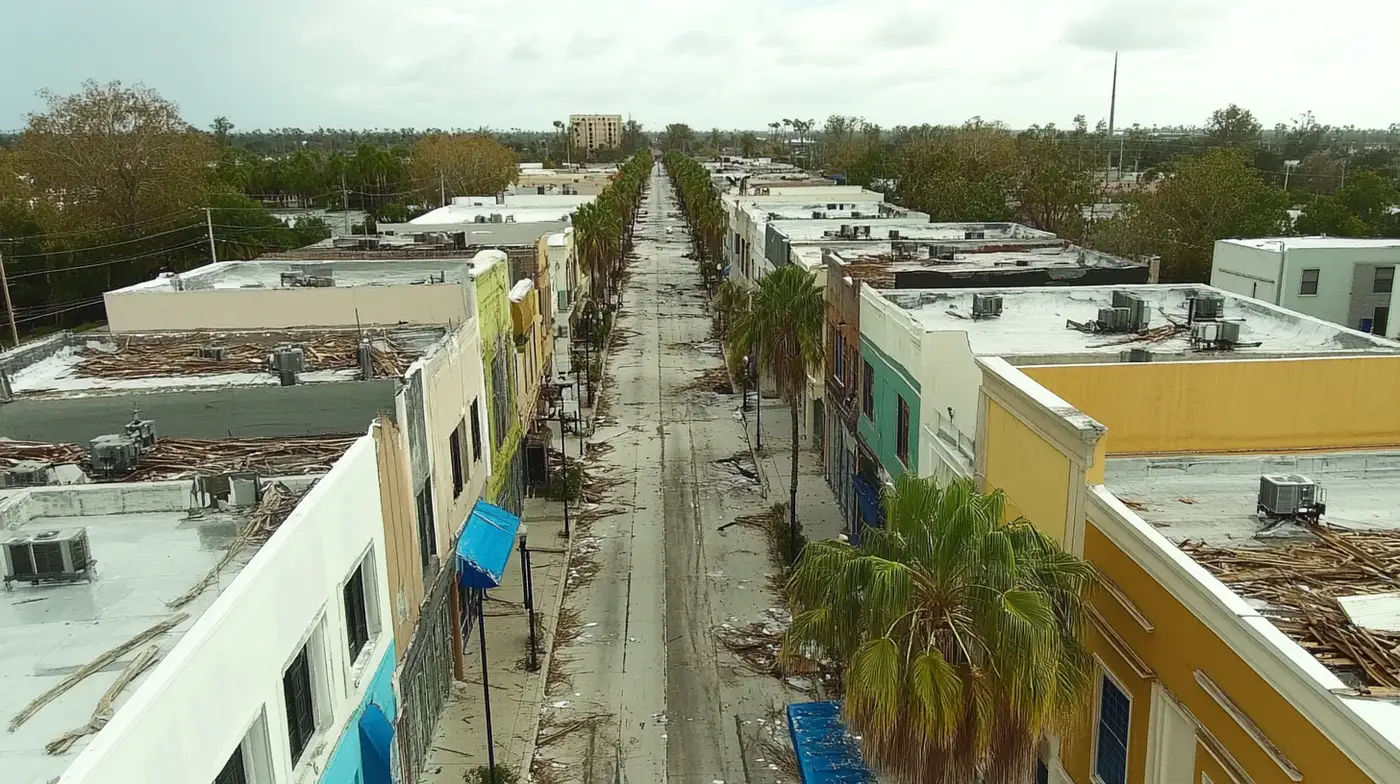
How your lease type determines storm repair responsibility
Commercial leases fall into four basic structures, and each handles storm damage costs differently:
- Gross lease — Tenant pays flat rent. Landlord pays all operating expenses including insurance and all repairs. Storm damage: landlord's responsibility entirely.
- Modified gross lease — Tenant pays flat rent plus some operating expenses (often utilities). Landlord still handles repairs and insurance. Storm damage: generally landlord's responsibility.
- Standard NNN (triple net) — Tenant pays base rent plus property taxes, building insurance, and maintenance. Routine maintenance is tenant's responsibility. Major structural items (roof, foundation, exterior walls) typically remain the landlord's. Storm damage: split — routine repairs to tenant, major structural to landlord.
- Absolute NNN (bondable) — Tenant assumes all costs including structural repairs. May require rent continuation even if building is uninhabitable. Storm damage: tenant's responsibility entirely.
The structural vs. maintenance line in standard NNN leases
In a standard NNN lease, the most common storm damage dispute is whether a repair is "maintenance" (tenant's responsibility) or "structural" (landlord's responsibility). A Florida real estate law firm noted in January 2025 that NNN leases should "clearly outline all tenant responsibilities to prevent future disputes" and specifically address "insurance requirements, especially hurricane coverage."
Typical NNN lease structure assigns to the landlord: roof structure and membrane replacement, foundation repairs, and major exterior wall repairs. Assigned to the tenant: routine roof maintenance, minor repairs, keeping drains clear, and HVAC servicing.
The gray zone: when storm damage converts what would have been a maintenance item into a structural replacement. A minor roof leak is maintenance. A hurricane that lifts the entire TPO membrane and requires full re-roofing is structural — but if pre-existing deferred maintenance contributed, the landlord may argue the tenant's neglect turned a maintenance issue into a structural one.
Louisiana's default rule
Louisiana's Civil Code provides a default opposite to what most NNN leases say: the lessor is responsible for all repairs necessary to keep the property usable (Article 2691), unless caused by the lessee's fault or excessive wear. This default applies only when the lease is silent — well-drafted NNN leases override it explicitly.
Absolute NNN: when the tenant owns the risk entirely
Absolute or "bondable" NNN leases shift everything to the tenant — including structural repairs, roof replacement, and sometimes even the obligation to continue paying rent if the building becomes temporarily uninhabitable after a storm. These leases are most common with large national tenants (fast-food chains, big-box retailers, banks) who want full operational control over their locations.
For a tenant in an absolute NNN, storm preparation is essentially equivalent to owning the property. You need: commercial property insurance covering the building structure at full replacement cost value; a wind/named storm deductible you can absorb; business interruption coverage with a civil authority trigger; and a clear understanding that a major hurricane could require you to fund a complete roof replacement before you can reopen — while still paying rent.
Insurance proceeds after a storm in an NNN building
Most NNN leases address what happens to insurance proceeds after a casualty event. Common provisions:
- Landlord receives and controls proceeds — the landlord gets the insurance check and is obligated to rebuild. Tenant may have rent abatement rights during reconstruction.
- Tenant collects proceeds and repairs — in absolute NNN, the tenant carries the insurance, receives the proceeds, and is obligated to restore the building.
- Casualty termination rights — if damage exceeds a threshold (often 50% of replacement value), either party may terminate the lease. This is a major risk for tenants who have invested heavily in a location.
The lease section covering insurance, casualty, and restoration is often the least-read section at lease signing and the most important section after a hurricane. Review it before storm season, not after.