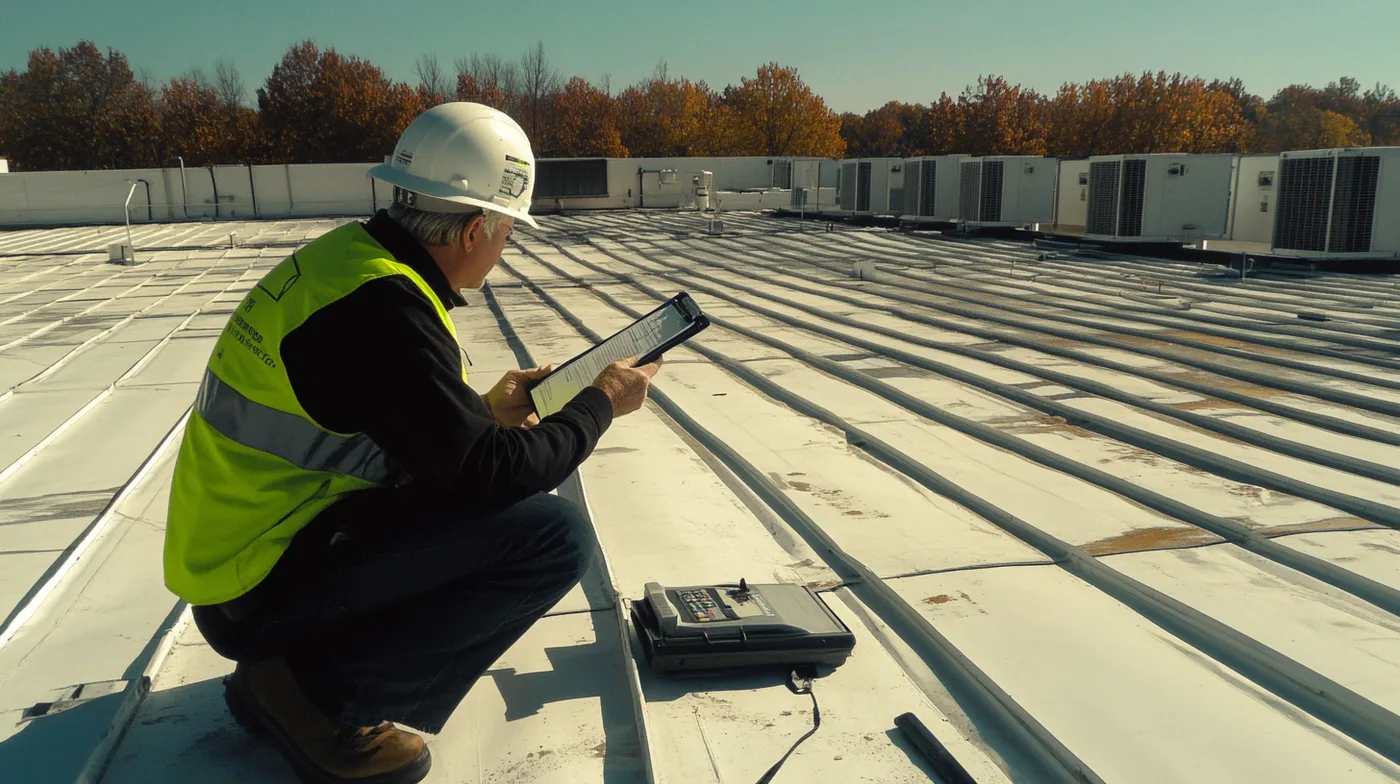
What "ponding water" actually means on a commercial roof
Ponding water is defined by most roofing industry standards as water that remains on a roof surface 48 hours after a rainfall event has ended. By that definition, most flat commercial roofs with inadequate slope or blocked drainage pond regularly — and most property owners have no idea it's happening.
The industry standard minimum slope for a commercial flat roof is 1/4 inch per foot (2%). Many older commercial buildings fall below this standard, creating natural low points where water collects after every storm. New construction is held to this standard; existing buildings may not have been retrofitted to meet it.
⚠️ Ponding water voids most manufacturer warranties
Nearly every major commercial roofing membrane manufacturer — GAF, Carlisle, Firestone, Johns Manville — includes ponding water exclusions in their warranty language. If your roof develops a leak that can be attributed to ponding water conditions, the manufacturer's warranty does not cover the repair. This is a silent warranty voider that most building owners never read until it's too late.
What ponding water does to a commercial roof over time
- Membrane degradation — sustained water contact accelerates UV damage, plasticizer migration in PVC membranes, and oxidation in EPDM. A membrane designed for 20 years of service may fail in 10–12 years with regular ponding.
- Insulation saturation — water infiltrates seams and finds its way into the insulation layer beneath the membrane. Saturated insulation loses its R-value and creates conditions for membrane delamination.
- Structural overload — water weighs approximately 5 pounds per square foot per inch of depth. A 2-inch pond covering 1,000 square feet adds 10,000 pounds of dead load to your roof structure. Most commercial flat roofs are designed for 10–20 lbs/sq ft of total load. A deep pond event after a major storm can approach or exceed design limits.
- Algae and biological growth — standing water creates conditions for algae, moss, and biological growth that physically degrade membrane surfaces and retain additional moisture.
Ponding water and your insurance claim
When a commercial roof fails after a storm and ponding water has been present, insurance adjusters have a built-in denial argument: the damage was caused by pre-existing ponding conditions — a maintenance failure — rather than the storm event itself. This is the "pre-existing condition" defense in its most common commercial form.
Document drainage system condition before storm season
Dated photos showing clear drains, functioning scuppers, and proper slope establish that your roof was properly maintained before any storm. Adjusters cannot argue pre-existing ponding conditions if you have photographic evidence of a maintained drainage system.
Clear drains before each storm season
Quarterly drain cleaning is the most cost-effective maintenance activity for any commercial flat roof. Document drain clearing with photos and dates. A drain cleaning log is direct evidence against a deferred maintenance claim denial.
Address chronic ponding areas structurally
If your roof has known chronic ponding locations, adding tapered insulation or additional drainage points is a capital investment that protects both the membrane and your insurance coverage. Get a professional assessment and fix documented before any claim event — retroactive repairs look like cover-up to adjusters.
Informational purposes only. The content on this page is general educational information about commercial roofing and property insurance — it is not legal advice, insurance advice, or a guarantee of any specific outcome. Insurance policies, lease terms, building codes, and contractor licensing requirements vary by state, carrier, and individual circumstances. Always consult a licensed insurance professional, attorney, or qualified contractor for advice specific to your situation. StormRoofQuotes is a roofing lead-generation service and is not a licensed insurer, attorney, or financial advisor.