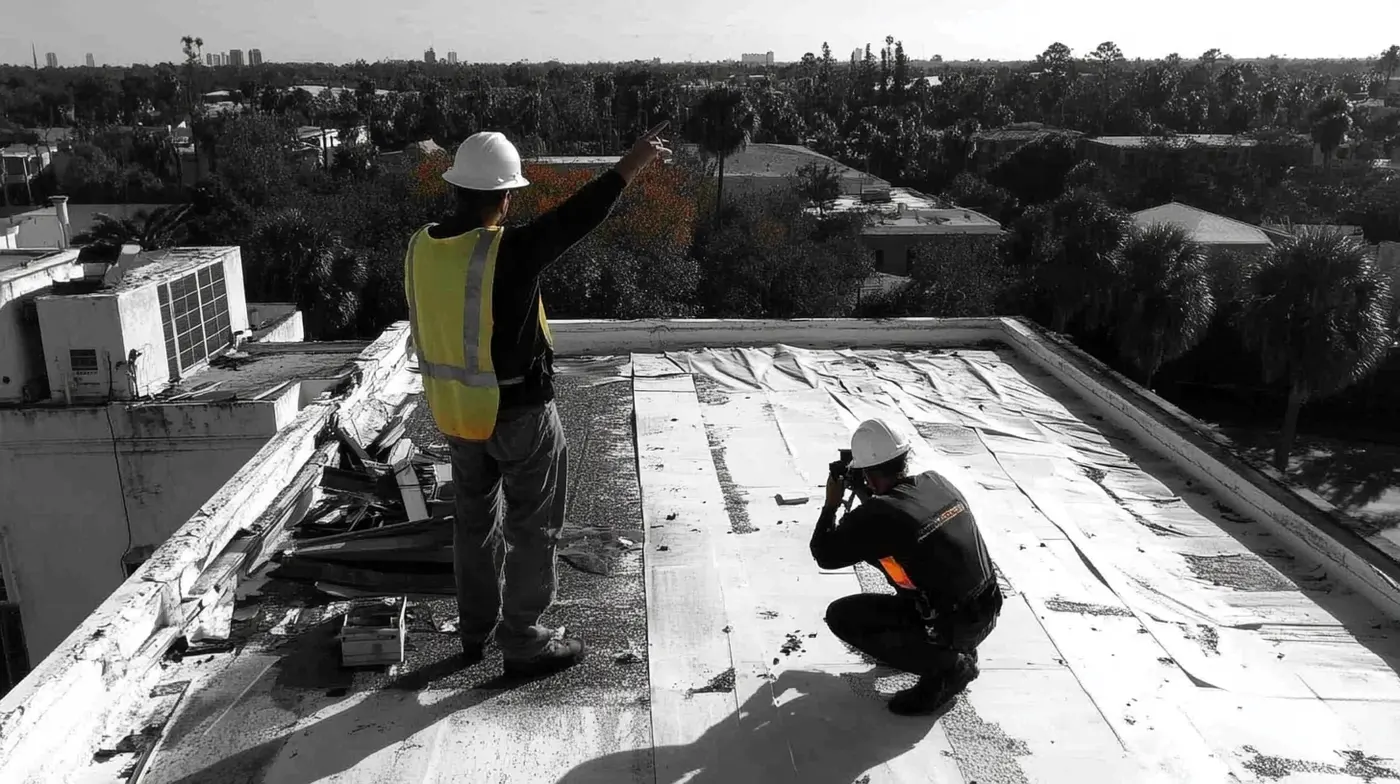
Why flat roof hail damage looks fine from the ground
Residential hail damage is visible — dented gutters, cracked shingles, broken windows. Commercial flat roof hail damage is invisible from ground level and frequently invisible even to untrained eyes on the roof. This creates a systematic problem: commercial property owners don't file claims for damage they don't know they have, or file late after the membrane has failed completely.
Hail punctures on TPO, EPDM, and PVC membranes are often under one inch in diameter. They don't immediately leak — they allow moisture infiltration into the insulation layer beneath the membrane. That moisture compromises the insulation, creates conditions for membrane delamination, and eventually causes interior leaks — often 6 to 18 months after the original hail event. By then, the connection between the leak and the hail event that caused it is much harder to prove.
⚠️ The 6–18 month delay problem
Hail damage that infiltrates commercial roof insulation doesn't appear as an interior leak immediately. The visible drip point may not appear until months later — and it rarely appears directly below the breach because water travels laterally through insulation layers before finding an interior entry point. Filing a claim after this delay requires strong evidence that the hail event, not gradual wear, caused the damage.
How to identify commercial roof hail damage
A licensed commercial roofing inspector looking for hail damage examines:
- Membrane surface — hail strikes on TPO appear as circular bruises or small punctures; on EPDM as granule displacement or surface cracking; on built-up roofing as granule loss exposing the underlying membrane
- Metal components — HVAC equipment, metal edge trim, flashing, and downspouts show clear hail strike patterns (dents) that can be matched to storm date and size data
- Skylights and translucent panels — crazing, cracking, or puncture patterns consistent with hail
- Moisture infiltration — infrared thermography can detect moisture in insulation layers before it causes interior damage, providing objective evidence of breach
📊 2025 hail data — the scale of the problem
Texas recorded 902 major hail events in 2025 — more than any other state. U.S. roof repair and replacement costs from hail reached nearly $31 billion in 2024. Severe convective storms (which produce hail) became the second-costliest insured disaster category of 2025, trailing only the LA wildfires according to Munich Re.
Filing a commercial hail damage claim: what you need
A successful commercial hail claim requires connecting three things: the storm event, the documented damage, and your building.
Document the storm event
Hail size and storm track data is available from NOAA's Storm Events Database and commercial weather services. Your inspector or a public adjuster can obtain a certified weather report confirming hail size and the storm date at your property's GPS coordinates. This ties the damage to a specific covered event.
Get a commercial roofing inspection before the insurer's adjuster visits
An experienced commercial roofer who inspects your roof before the insurer's adjuster arrives gives you an independent damage assessment. Adjusters work for the insurer — a commercial roofing professional working for you identifies damage the adjuster may downplay or miss entirely.
Document with infrared if moisture is suspected
Infrared thermography scans can detect moisture infiltration in insulation layers beneath an intact-looking membrane. This is particularly valuable for hail claims where the surface damage is subtle but moisture has already entered the system.
File promptly — don't wait for the leak to appear
File your claim immediately after a significant hail event, even if you don't yet see a leak. Most commercial policies require claims to be filed within a specific period after the damage event — not after the resulting leak appears. Waiting for the visible failure means filing late against a documented hail event.
Informational purposes only. The content on this page is general educational information about commercial roofing and property insurance — it is not legal advice, insurance advice, or a guarantee of any specific outcome. Insurance policies, lease terms, building codes, and contractor licensing requirements vary by state, carrier, and individual circumstances. Always consult a licensed insurance professional, attorney, or qualified contractor for advice specific to your situation. StormRoofQuotes is a roofing lead-generation service and is not a licensed insurer, attorney, or financial advisor.